Interview with Kenneth Jordan Standley

"If your film isn’t on HBO or Netflix and instead appears on a smaller independent streaming platform, it can sometimes feel as if you haven’t been allowed to sit at the top table with the kings and queens."
march 15, 2026
AVFRI: You have a BA degree in practical filmmaking, what did school gave you? Do you believe education is essential for a filmmaker?
Kenneth Jordan Stanley: I went to MET Film School Berlin, a film school from the UK that also has a location in Berlin. I learned a lot on my own through self-learning, but the school gave me the “how does this work?” and the “why does this work?” to things I was already doing and had learned independently. Beyond that, I learned many other aspects of filmmaking from the school and from my peers.
For example, I had no idea about the different roles or the overall production process, or even what a focus puller was. Most of my filmmaking up until that point had been videography - small branding work and documentary-style run-and-gun filmmaking. Film school helped complete the missing piece of the puzzle for me.
Education in an institution is not fundamental for filmmaking, but education itself certainly is. That education can come from your own efforts, from mentors, or from peers. You can watch things online, read, or learn by doing. Trial and error is also a form of education. Learning on your own - where you sometimes do things “wrong” - can be a slower road, but both approaches serve a valuable purpose in my opinion.
AVFRI: You are an American filmmaker who spends a lot of time in Europe working and participating in different projects. Can you compare the two filmmaking environments?
KJS: I have built most of my filmmaking career and experience in Europe, as I have lived here for the last 22 years, so my experience in the U.S. is smaller than my experience in Europe. However, I still have friends and peers there who keep me informed about film jobs, politics, and the general way things are done.
From my experiences visiting, there is generally more money involved in productions in the U.S. Overall budgets tend to be larger, and storytelling and points of view can be quite different because Europe and the U.S. are culturally very different. Europe is made up of many countries, each with its own cultures, subcultures, languages, and dialects. The U.S., on the other hand, is made up of 50 states that also contain many smaller cultures within them. Still, the overall mentalities between the U.S. and Europe are quite different.
In the U.S., things tend to be more professionalized and more money-oriented. I don’t mean that in a negative way or to suggest that Europe is not professional, but there are certain things here that would never slide there. The U.S. has a strong “yes, we can do that” culture - even when things are not entirely possible - whereas Europe is generally less like that.
In Europe, things are often more relaxed and easy-going, and people are generally less obsessed with money than they are in the U.S. American society is often described as an “every man for himself” culture, where for many people money becomes the number one priority. In daily life, advertising, and lifestyle, much is built around making money, owning things, excelling, and succeeding. It is a very competitive culture. From a young age you are taught to work hard and succeed, and if you do not, you are seen as not doing well. Perhaps with younger generations this mindset is slowly shifting.
Although I have less experience in the U.S. than in Europe, my impression is that things are often more efficient in the U.S., but also very money-oriented. In Europe, people tend to be less focused on money and more relaxed when working on a project.
The U.S. certainly has independent cinema and all kinds of filmmaking, but one obvious difference is that the film industry there is extremely profit-driven. Films are produced almost like a factory output for cinemas or streaming platforms. In many cases, it ultimately comes down to numbers.
AVFRI: Do you think there is any aspect of cinema that has fundamentally changed today compared to ten years ago?
KJS: What I can say is that things are now even more focused on mobile phones and social media. People are shooting entire projects vertically, which would not have been a thing ten years ago.
With the internet and social media, filmmakers can connect with each other more easily, reach festivals worldwide, and have their work seen much more easily than before. However, there are also some negative aspects at the moment. Many people are worried about AI and the impact it could have on jobs. There are fewer production jobs in some places, depending on where you are located, and productions are sometimes moved from one country to another for tax reasons or because it is cheaper to produce there.
People’s attention spans are also getting shorter. So there are definitely pros and cons to these changes. Streaming platforms have also grown significantly compared to where they were ten years ago.
AVFRI: Can you walk us through your creative process, from the initial spark of an idea to the finished work?
KJS: The creative process starts in my head. It’s all about what happens there, and I try to let it guide me. Nowadays I try to write things down so I don’t forget them. I keep a notepad filled with all kinds of ideas. Some get finished, and some don’t.
Sometimes I keep adding things to an idea or changing it over time, so it can gradually take a different shape. I usually have a vision of the final outcome and try to get it as close as possible to what I originally imagined. In the end, things sometimes change unexpectedly or in ways I didn’t intend, but that’s normal and part of the process.
During production I sometimes realize that certain things are not realistic because of budget, time, or logistical reasons. I used to have a big problem when things were not perfect because I wanted everything to match my vision exactly. Recently I have learned to be okay with “good enough.”
When a project is finished, I like to share it with others, although I can be quite self-conscious about it. I make things according to my own taste, but of course I also hope others will like them.
One thing I’ve noticed recently is that when a project I personally fund gets put on the back burner or doesn’t get finished, it’s often because the idea wasn’t very clear at the beginning or didn’t have a strong foundation. When a project starts with a clear vision and a strong foundation, it usually moves from start to finish with a steady production flow and very few interruptions.
AVFRI: What is 'Texalona'?
KJS: Texalona is a skateboard video series I started around 2008 or 2009. I first began learning to use cameras by filming skateboarding, combining that with my love for the sport. I skateboarded as a child and continued into my young adulthood. As a kid, I loved skateboard videos - especially how they were edited and how they motivated and excited us to go out and skate.
I also watched a lot of movies growing up. My parents exposed me to music and films that kids my age usually weren’t listening to or watching. When I was about 12 years old, I was already watching films that were meant for audiences 18 and older. Nothing too sexual or violent, but there were definitely some films that a 12-year-old probably shouldn’t have been watching in terms of comprehension.
There were movies I liked so much that I would watch them three, four, or even five times in the cinema. When my friends and I were around 12, we would sometimes pay for one movie on a Saturday and, when it ended, sneak into another movie or two. I also loved going to the video store. My mom would take me to Blockbuster on Friday nights when I was younger.
Although I had friends, I could easily entertain myself for hours playing with action figures or watching films and TV shows. I liked watching Nickelodeon and also Nick at Night. Nick at Night was the evening programming block on Nickelodeon that showed classic American television series like I Love Lucy, Bewitched, Dragnet, and Taxi. I was nine years old and already watching these classics at night.
Later, when I was living in Barcelona, this passion naturally transitioned from skating to filming. The name came from a friend who noticed that I had footage from Texas when I visited there, as well as footage from Barcelona. He suggested, “Why don’t you call it Texalona”?
For a while we produced DVDs, skateboards, stickers, and T-shirts. The last video, Texalona 3, I released on a USB stick in a DVD case as a limited edition for hardcore collectors. It started as a way to promote skateboarding in Texas and Barcelona, and now it has grown into something more international - skateboarding seen through my camera lens.
AVFRI: In your opinion, what is the most challenging aspect of being a filmmaker nowadays?
KJS: The most challenging aspect for me as a filmmaker is getting jobs that are well paid and that you actually enjoy, as well as getting collaborative projects off the ground with a decent budget and having them turn out the way you envisioned. There isn’t a handbook they give you at school on how to deal with the real world of filmmaking.
Nowadays, technology is much cheaper than it used to be, and people can see your work much more easily. That’s a great thing, but it also means the field is oversaturated. Many more people now have the chance to make something and put it out there - something that wasn’t really possible 30 years ago - but at the same time it creates a lot of competition.
It really depends on what your goals are. Some people want to make filmmaking their full-time career, others do it purely for artistic reasons, and some try to balance both. Today we can make a short film on a low budget, put it online in different places, and potentially have millions of people see it. That’s pretty amazing.
In that sense, it puts power more into the hands of the people rather than the executives. Ultimately, I think most people simply want to make films they enjoy and get paid for doing it.
AVFRI: From your own experience, what have been the main challenges of finding work in the film industry?
KJS: The main challenge is getting the jobs you want - and ideally better ones than the last ones. Unfortunately, no matter how good you are, or how good you potentially could be, there is a lot of “gatekeeping” in the film industry. People often don’t want to give you a chance if they don’t know you, which is also somewhat understandable.
People tend to work with those they already know and trust. But at the same time, you need someone to give you that first opportunity so you can gain experience and get your foot in the door. Because of this, it can be difficult to build the experience, network, and trust needed to enter the larger job market.
It’s a shame, because this keeps many talented people from being seen simply because they didn’t get lucky or didn’t have the right social or networking skills to get that first opportunity.
AVFRI: What themes or questions do you find yourself returning to repeatedly in your work, and why do you think they continue to resonate with you?
KJS: I wouldn’t say there is a specific theme, but maybe entertainment. I like to make something that makes you feel something when you watch it. Ideally, it should hook you and leave you with a certain feeling.
Do you feel that risk-taking in cinema is becoming harder to sustain, especially for independent filmmakers?
I don’t think risk-taking is hard to sustain. It’s actually becoming easier to make films with less money, and it’s also easier to have your work seen. So many stories have already been told and so many things have been done, but today you can take creative risks with much less to lose.
AVFRI: How do you navigate moments of doubt or exhaustion when projects take years to materialize?
KJS: I navigate moments of doubt by trying to push through them mentally. It’s like trying to swim to the surface of the ocean when you’re running out of breath. It feels like leaving something unsaid if you stop.
Most of the time, even when that happens, I still manage to finish the project. There have been a few cases where things fell apart or people involved had conflicts with each other, but I still managed to complete them.
In the end, it’s a great feeling when you finally press that “export” button.
AVFRI: How has the evolution of digital platforms and alternative distribution channels influenced the way you think about audience engagement?
KJS: Alternative distribution channels can be a good tool for up-and-coming filmmakers. They give you the opportunity to have your independent film seen, or at least the possibility of it being seen.
I feel like there is still some clout around this topic. If your film isn’t on HBO or Netflix and instead appears on a smaller independent streaming platform, it can sometimes feel as if you haven’t been allowed to sit at the top table with the kings and queens.
But regardless, these platforms still provide new ways to get your work or art out there. They have influenced my thinking to some extent as well. When I’m developing an idea, I sometimes find myself asking, “If we shoot it this way, could it be pitched to…?” So it does become a question that comes to mind when thinking about new projects or jobs.
AVFRI: Do you think the concept of "success" in filmmaking has fundamentally shifted, and if so, how do you define it for yourself?
KJS: I don’t think the concept of success has fundamentally shifted. People still want to make films, show their films, and - some more than others - make money from them.
Maybe today success is more connected to visibility through social media, streaming platforms, film festivals, and the internet in general. A new idea of success for some filmmakers could simply be having their film seen all over the world through social media or streaming platforms, rather than focusing only on making money from it.
In the past, having so many people see your film would have been much harder unless it was picked up on the film festival circuit or distributed by a company.
For me, success is a combination of all of these things. I want to make work that I’m happy with, show it to people, reach a wide audience, and hopefully also have some financial return.
What I really enjoy is entertaining people with a film I make, or sometimes sending a message - whether it’s social or political. Overall, I think I’m most interested in entertaining people, whether they watch something and think, “Wow, that was cool,” or simply laugh.
AVFRI: Looking ahead, what directions or risks are you most excited to explore in your future projects?
KJS: This year I will be attending a one-month workshop where I’ll be learning to shoot on 35mm film, which I’m really looking forward to. I want to continue learning, growing, and trying new things as a cinematographer.
I also want to shoot more narrative projects and push myself out of my comfort zone. Lately I’ve been intentionally trying to film less skateboarding and focus more on narrative work.
Right now I’m writing a feature film - a fictional drama based on a true story, inspired by my experiences in Europe. Before directing something as big as a feature film, I’d like to direct a few narrative projects first.
I’m also trying to attend more film festivals and industry events than before for networking purposes, such as Camerimage, Berlin International Film Festival, and NAB Show.
I went to NAB last year, which gave me a lot of insight into the American market. NAB is a huge event in Las Vegas where companies from across the film and media industry present their newest products. You can try out equipment, see demonstrations, and of course companies are there to promote and sell their gear.
There’s also a lot of interactive activity, and it’s a great opportunity to network. When I say cinema companies, I mean any company connected to filmmaking—whether they produce sound equipment, camera gear, lighting, grip equipment, bags, cranes, lenses, or other production tools.
AVFRI: What has been the most challenging project you've worked on so far, and what did it teach you about yourself as a creator?
KJS: The most challenging project I have worked on so far was probably my last skateboard film, Texalona 3. I’m referring to a project where I had a lot of control - almost complete control - over the production. I’ve worked on other challenging jobs before, but in those cases I had less creative control or none at all.
This project was difficult because I had personal differences with some of the people involved, and a few of them dropped out in the middle of the production. There were also other hurdles along the way, to the point where the project almost never saw the light of day.
What I learned from that experience is that your creative vision doesn’t always turn out exactly the way you imagined or wanted. Sometimes you have to adapt and work around unexpected situations.
During this project I also learned to stop trying to make everything perfect and instead accept “good enough” and keep moving forward. Of course, sometimes you can make things perfect - or what you believe is perfect - but you also need to know when to push for that and when to settle for “good enough” or find solutions when things don’t go the way you planned.


I met with Vera Tulyakova in 2001, shortly before her death in the spring of the same year. We sat down at the Independent Cinema and Television School in Moscow, which she founded and directed until the final days of her life. It felt as though Vera’s sorrow had never faded; she cried often while reflecting on her memories with Nazım Hikmet -the poet, playwright, novelist, and essayist who reshaped modern Turkish poetry and became a powerful symbol of artistic freedom, political resistance, and humanism.
This excerpt from our long interview was first published the month following her death in the Avrupa newspaper. Today, almost 25 years later, we revisit her story.
The Nazım I saw was a beautiful, elegantly dressed Nazım, whom everyone adored. But this man was sentenced to 58 years in prison, spent 17 years of his life in a feudal Turkish prison, and suffered for his ideas.
Interview by Elvan Levent
february 28, 2026
Elvan Levent: When did you meet Nazım Hikmet?
Vera Tulyakova: After graduating from the Russian State Film School, I was assigned to the animation department at Mosfilm Studios. It was during my time working there, in the fall of 1955, that I met Nazım Hikmet. Nazım had been in the Soviet Union for four years at that point...
Elvan Levent: Did you know who Nazım Hikmet was when you met him?
Vera Tulyakova: It was impossible not to know, because Nazım was a person who was talked about a lot. When I started working, everyone in the studio was experienced, older people; artists and designers who created excellent cartoons... At that time, they were working on the screen adaptation of a new fairy tale. So, in a sense, I fell right into that fairy tale...
Meeting Nazım...
I was given the task of preparing a film for Albanian children. They didn't have their own cinema. So I found an Albanian fairy tale and wrote a script based on it. But when it came to drawing the frames for the film, it turned out that no one knew anything about Albania. None of the studio staff had ever been to Albania in their lives. In fact, no one had ever been anywhere outside the Soviet Union. We started looking for someone who could advise us on how to make the film. Our efforts were in vain. Then one of the older directors jokingly said, “Go to Nazım Hikmet. The Turks ruled Albania for four hundred years, and he knows everything about it.” At first, we were all very scared. To knock on the door of someone as famous as Nazım Hikmet with a film about Albania...
But there was no other option. They gave me his phone number. Thinking that my childish voice would not be taken seriously, I asked the studio chief to call Nazım Hikmet himself, and he agreed. But when he heard Nazım's response on the other end of the line, he handed the phone to me. I stammered with excitement as I tried to explain how we needed his help.
Nazım asked me, “Is this important to you?”
“Yes”, I said, “very important”.
“If it's important, then come”, he said.
“When should we come?”
“If it's that serious, come now”, he said.
We jumped in the car with the film's director and went. It was such a big and important event for us... I remember it like it was yesterday, standing in front of his door, too nervous to knock. When he opened the door, I saw a tall, very beautiful person standing there. He had a head like gold... Nazım agreed to help us. He laughed a lot when we explained the situation to him. It was clear that drawing the film frames would be easy for him. Then he asked us questions about our lives. That day, I drank Turkish coffee brewed in a cezve for the first time in my life. The house was decorated in a very special way; there were sofas, cushions on the floor, and lots of toys. Nazım kept asking me questions. Who were my parents, what poems did I like, what kind of movies did I enjoy, how much money did I earn...
He would ask everyone how much they earned to find out how people really lived. Because he was aware that the Soviet propaganda had brainwashed the people. He asked me if I often met famous people. I told him that I had met Churchill and his wife before, and that his wife had even sent me a pair of shoes for spring. I remember Nazım bending down to look at my shoes. At that time, clothing was a huge problem in Moscow. There was nothing to wear. But we still looked stylish because there were talented tailors who could make a beautiful vest out of three blouses. The real problem was shoes. Our shoes were terrible. So when Nazım bent down and looked at my shoes, I nervously tried to hide them. He just smiled without saying anything.
That day, Nazım kept us for a long time. But when we finally got up to leave, he turned to Akper, who was translating, and said, “She's a beautiful girl, but her breasts are too small.” Even though Nazım said this sentence in Turkish, I understood what he meant. I immediately blushed bright red. I was really very thin. But while talking about serious things like the Kremlin and space, suddenly a sentence like that next to me...
Nazım's face changed immediately. A cold expression appeared in his eyes.
“Did you understand what I said?” he asked.
"Yes", I said.
"Do they teach you to speak Turkish at film school?"
"No", I said, "I don't know Turkish".
“Then how did you understand what I said? You must explain this to me. Or did they send you here on purpose? What do they think, that blondes are everything in this life for Nazım Hikmet?”
I was so excited I couldn't understand what was going on. In those few short minutes, it felt like a whole year had passed... But you said your compliment in Tatar, I said. Do you speak Tatar, he asked. I told him that I had lived in Tatarstan for a while as a child, so I knew Tatar well.
Nazım started laughing. I felt terrible. At that moment, I realized that kindness had two sides, and even this person standing in front of me could suspect that I was a spy. My heart was broken, but I couldn't say anything to him. I couldn't even tell him how much it had shaken me to see such a suspicious and cruel person in him all of a sudden...
Nazım understood how shaken I was, and as I was about to open the door and leave, he held the door with his hand and said, “You need to understand me and not be upset with me, I needed to find out who you were. You may find it hard to believe, but the life that revolves around me is not a simple one. The most terrible lie is the lie with a beautiful face”...
Nazım asked if I would come again next time. "No", I said, "next time the artists will come". “Then why do you want me to help you as a consultant? I know many beautiful Turkish fairy tales; I am a writer. Why don't you ask me to write my own fairy tale for you?” he asked.
“Because writing fairy tales for cartoons is very difficult; they have to be special fairy tales,” I said. To which Nazım replied: "I know some very special fairy tales too. If I come up with something, can I call you?"
Everyone in the studio was curious to know what kind of person Nazım Hikmet was.
I replied, “First there was only Lenin, now there is Nazım Hikmet.”
The next morning, I arrived at work at nine o'clock sharp, and at nine o'clock sharp, the phone rang. It was Nazım calling.
“Hello”, he said, “I've created a wonderful fairy tale for you. When can I come over?”
And so I began listening to Nazım's fairy tales...
At first, we thought no one knew about our relationship. We thought so because we were both flying. We were flying so high that we thought no one could see us. But in reality, the whole world was chasing Nazım. He was a man of the universe, loved by everyone. Despite this, the attitude of all the KGBs in the world towards Nazım was the same. In Paris, for example, all our belongings were searched thoroughly...
I didn't realize Nazım loved me. Because he treated me like his daughter; like a little girl he could tell everything to... Nazım loved me with the love of someone who had no one else to love. We talked about literature for hours. Our relationship was a very intellectual one.
There was a 30-year age difference between us, and when Nazım and I got married, everyone looked at us as if they were visiting the zoo.
Our marriage was described as unconventional, breaking taboos. They all used to ask the same question: "How Nazım had managed to destroy a communist family?" It was an event that drove everyone crazy. I was previously married, my husband was a very good person. But then Nazım came into my life...
For the first two years, our relationship was completely platonic. Because on the first day we met at Nazım's house, Nazım asked the female director who came with me if I was married. The director replied, “What marriage? She's still a virgin!” I later asked her why she did that. The director said, "Because all Turks are jealous. If he thinks you're a virgin, he'll enjoy working more and thus write the script for us faster"... But this lie continued for a long time. Some time after we met, Nazım came to the studio and declared his love for me. We were standing between two flights of stairs; “I love you so much that my heart is bleeding, but I have no hope, because you look at me like a father. That's why I'm leaving for Moscow,” he said.
Tears streamed from Nazım's eyes at that moment. I was in complete shock. Nazım left for Moscow without giving me a chance to hug him. At first, I felt a great longing for him, because Nazım had made me very attached to him. And then suddenly, everything was over. I suffered greatly during those days. Later, Nazım returned to Moscow for a youth festival and called me. And so, everything started again...
Nazım's death was the second turning point in my life. It's very difficult to describe this feeling, to talk about it...
Nazım left me with many good friends. Close friends whom he distinguished from others. They helped me a lot. At that time, I had my 11-year-old daughter (from her first husband) and my ill mother with me. People who loved Nazım from all over the world came to the house where we lived with Nazım. That house belonged to Nazım Hikmet, and I couldn't close its doors to people.
Nazım was an infinitely kind-hearted person. He was ready to give everything he had to anyone in need, without even asking their name. He would open the door of the house at eight in the morning, and the door would remain open all day. Anyone who wanted to could enter the house.
Every guest was offered a bowl of soup or at least a cup of coffee. The visitors were usually strangers with problems. Life was very difficult at that time, and people asked Nazım for all kinds of help. For example, getting sick people admitted to the hospital was a huge problem. Finding a place to stay, finding a job, writing a letter to someone; a never-ending stream of people... At the same time, as if he sensed his impending death, Nazım repeatedly asked me to promise him that I would never marry and that I would protect our home. Nazım loved our home very much and wanted it to remain that way forever. The days without him were very difficult (crying)...
I raised my daughter and gave her a good education. Now she is also a lecturer at the State Theater and Arts School. She also helps me at the Independent Cinema and Television School that I founded. After Nazım's death, I worked very hard, constantly, because I had to protect and preserve everything he left me in the best possible way. I never sold any valuable items; not even a single painting… In very difficult times, I sold my own belongings, my expensive jewelry, only the things that belonged to me… Life here was always difficult…
Now I founded the school partly for Nazım, in his memory. Because I truly believe that one day we will meet again. To finish our unfinished conversation…
I constantly think about how much this man believed in me, how much hope he placed in me... I wanted to make him proud. I kept all the promises I made to him. I trained many excellent students at the Russian State Institute of Cinematography, where I taught for many years. But I still founded this school to earn his approval... Very few people could reach Nazım's level.
The Nazım I saw was a beautiful, elegantly dressed Nazım, whom everyone adored. But this man was sentenced to 58 years in prison, spent 17 years of his life in a feudal Turkish prison, and suffered for his ideas. He had committed no crime. Nazım spent years in prison for his romantic ideals. There were very few personal joys in his life. Nothing was as it appeared from the outside. But Nazım was very strong. He was a great poet who kept his heart open to everyone...
Elvan Levent: Didn't you have a critical attitude towards Turkey?
Vera Tulyakova: The situation in the country where I lived was not much different from that in Turkey. In the Soviet Union, people were also imprisoned for years for their beliefs.
Elvan Levent: What do you think about Nazım Hikmet's grave being brought to Turkey?
Vera Tulyakova: This is a very sensitive issue that I cannot bear. That's the only reason I don't talk to Turkish journalists anymore. They can't make any demands; only the people can demand this. I have been to Turkey several times and I know that they blow up cemeteries there. Shortly before his death, when I met with Aziz Nesin, who was a very good friend of mine, he told me he was sure his grave would be opened. This was in the 90s. Earlier, they had set fire to the building where Aziz Nesin held his conferences. People died there too. And after all this, the politicians who incited the people stand up and say, “We will take Nazım out of his grave and bring him to Turkey”. But the poet cannot lie among soldiers...
Taking Nazım's grave to Turkey has turned into a complete political game. Some people are using this... But it is a very dangerous game. That is why I did not accept it...
They exiled Nazım from his homeland; would he ever have left his homeland of his own free will? Nazım knew about the plans they had made for him. First, they would send him to the army, then they would shoot him on the pretext of trying to escape across the border... Nazım flew away from there like a bird. It is impossible to imprison the poet's soul...
Now they have published all his books. But it was not the state that did this, it was intellectuals. I still live in the house where Nazım and I lived together, but to this day, no Turkish statesman has ever visited Nazım's house. Because Nazım Hikmet was an outlaw for state officials in the past, and he remains an outlaw today... It used to be forbidden to teach his books in schools, and it is still forbidden today...
Nazım was a man devoid of jealousy. I don't know where or when he left that feeling behind, but Nazım chose a very difficult path for himself that set him apart from everyone else. He always had a desire to get to know everyone he met more closely and to do them good.
One day, something very unpleasant happened. An acquaintance of Nazım's, whom he had known for a long time and who had spent many years in prison, came to Nazım after being released. Nazım helped him a lot. He found him a home and gave him a large amount of money. Later, when this person saw Nazım on the street, he changed his route without even saying hello... He never contacted him again after that incident. He didn't answer Nazım's calls and avoided meeting him. This incident devastated Nazım. “I probably didn't give him the money properly and hurt his feelings; I should have been more thoughtful. The person I helped is acting this way because he feels indebted to me”, Nazım tormented himself with these thoughts for a long time...
LIVES SHAPED BY THE SEA
LU SALINARU january 16, 2026


Alessandro Montalbano:
❝
I didn’t want to conduct formal interviews, and I didn’t do it. I wanted to observe and bear witness to their work without intervening, almost as if we weren’t there at all.
I wanted the viewer to feel like a quiet observer of an ancient craft and tradition, rather than being guided or explained through it.
We spoke with Alessandro Montalbano and Artūrs Šulbergs on their recent documentary Lu Salinaru which sheds light on the labour of sea salt workers in Sicily...
AVFRI: How did the idea of filming salt workers come about?
Alessandro: I was always curious about the way the salt from the seawater goes to the basins and about the rest of the process. I was also curious about the world of the sea salt workers and so I started making a research, reading articles, watching documentaries, interviews. I can say that one of the main inspirations for this documentary was the amazing Sicilian documentary filmmaker Vittorio De Seta, he was active in 50s and he made short documentaries about Sicilian traditions- very short but they were beautifully made..
AVFRI: What is the main concern regarding the possible disappearance of the salt workers’ profession?
Alessandro: I think that traditions are part of our history and when this type of work disappears, it is not just the work that disappears but also part of who we are. And I wanted to raise this question especially today, in this era when AI and developing technology are taking over, it is important to preserve the traditional trades.
AVFRI: What was the most important aspect of the film for you during shooting?
Alessandro: For me, the most important aspect of the film during shooting was to portray this ancient, traditional work truthfully, without explaining anything, simply showing the work and the people behind it. Equally important was using the text at the beginning and end to provide minimal context and to open a space for reflection on what we were seeing and on the future of this labor. I often saw tourists stopping to watch the salinari (salt field workers), taking photos or filming them, and I wondered whether they realized how fragile this profession has become. The film is meant to invite reflection not only on this specific job, but also on many other traditional forms of labor that face a similar risk today.
AVFRI: How long did the preparation take, and so the total production, including editing?
Alessandro: I had the project in mind for quite some time. In 2024, it wasn’t possible to shoot, so we postponed the production to 2025. We arrived in Sicily a couple of weeks before filming because the exact start of the salt harvest wasn’t known yet, as it depends heavily on weather conditions. This early arrival allowed us to find the collaborators (a camera assistant, a sound recordist, and a runner) and to do a few location scouts in Marsala. We shot for three days, roughly from 3 pm to 11 pm each day. The editing process took about one month.
AVFRI: How do the people of Sicily react to this situation?
Alessandro: There are still many traditional crafts and jobs in Sicily, and they remain an important part of local culture and identity. When talking with my relatives, everyone knows about the work of the salt workers and knows how physically demanding it is.
Sicilians have a deep respect for these traditions, and there’s a strong awareness that such jobs are slowly disappearing. I think they are very proud of their heritage, and these practices remain deeply meaningful to the community. This reminds me of Calatafimi, my mum’s hometown, and where we were based during the shoot. I once attended a celebration called the Festa degli Antichi Mestieri, a festival of old traditional crafts and jobs, where people can observe and learn about them. There are many events like this all over Sicily. People really care about their history and traditional crafts, and that commitment is truly wonderful.
AVFRI: How did you come together as director and DOP? Is this your first collaboration?
Alessandro: Artūrs and I were studying together in the UK in the film production department and since then actually we have collaborated quite a lot and we created many projects for our portfolio. Apart from this recent documentary we are also focusing a lot on fashion and commercials because I work as an assistant director and lately I have been working a lot in the fashion industry in Milan. Although we studied film, since I started working on fashion film sets I fell in love with fashion. So, Artūrs and I have been collaborated a lot since 2024-2025 on these spec ads - so they are not commissioned - I just pick a brand and then I create a story and then we go and shoot it. Most of them have been filmed in Sicily - where we have also filmed the documentary. Last summer we also had two fashion shoots in Artur’s home country. Whenever I have free time, I like developing my own projects.
Artūrs: Alessandro and I met in the UK in 2015, when we began studying Film Production at the University for the Creative Arts in Farnham. After graduation, we teamed up for our first project. In 2019, we made a short fiction piece, The Art of Killing. Since then, Alessandro has established himself as an assistant director on feature films and fashion commercials in Italy, and I have been working on short documentary and fiction film projects. We were eager to expand our portfolio in both documentary and fashion. In 2023, while shooting fashion spec ads, Alessandro showed me the short documentaries by Italian director Vittorio de Setta, filmed in the 1950s. With these short docs in mind, Alessandro told me about the idea of capturing the hard manual labor of salt workers in Sicily – a tradition of work that is disappearing in the salt fields. As a DOP, it was clear to me from the start that capturing it, against the backdrop of the beautiful Saline di Marsala, would be a special opportunity.
AVFRI: What was the hardest part or aspect to film during the documentary?
Alessandro: I think Artūrs would say the hardest part was the salt. For the equipment, this meant cleaning everything carefully each night when we returned home around 1/1:30 a.m., because salt can easily damage film gear. For me, it was managing the relationship with the owner of the salt pans where we were shooting. There were many rules and limitations, but in the end, everything worked out fine. As a filmmaker, this was a valuable exercise: dealing with people who don’t work in the film industry and are primarily production-oriented requires finding common ground and negotiating your presence.
Artūrs: For me as a DOP, it was a challenge to adapt to the workers’ movement, especially on the first day. One of our visual goals was to capture the action up close, using wide lenses between 24mm and 35mm. The workers (salinari) work fast and stay focused to get a lot done each day. So, we had to keep up with their pace and movements on the spot. This was a challenge in the wet saltwater basins. The concentrated saltwater, salt particles in the air, and the July heat meant extra care for camera gear. This was especially necessary when shooting from a low angle. Luckily, we were joined by a great camera assistant, Stefano, from Sicily, who made this easier for us.
AVFRI: How was the film financed? Are you planning to expand the story into a feature documentary?
Alessandro: I personally financed the project, and Artūrs also contributed by covering part of the equipment rental costs. At the moment, we are not planning to expand the story into a feature documentary, but never say never.
AVFRI: What did you discover during the filming process?
Alessandro: As a kid I used to go to Marsala which is the place where we shot the documentary. And we would always go in the afternoons because the light there is beautiful as you can see in the second part of the documentary. And I remember seeing the salt scattered on the side of the salt pans- it is a magical place. I actually never had a chance to see the salt harvesting process and I understood the reason only while making this documentary.
AVFRI: How did you prepare for the film? Can you talk about pre-production, and how long the filming lasted?
Alessandro: The filming lasted three days, which was the maximum time the owners allowed us to be there.
Preparation involved reading as much as possible about this craft and watching all the available material online, interviews, reportages, and documentaries. I also contacted the owners more than a year before filming to introduce ourselves, present my idea, and ask all the questions I had.
The next step was creating a storyboard of how I imagined the final film and developing a shot list, so we would know exactly what footage we needed. Then we watched all the documentaries by Vittorio de Seta who was the main inspiration for this work.
Initially, we wanted to start filming on their very first day of work, but that wasn’t possible unfortunately because due to the weather conditions they decided at the last minute to start four or five days prior to what was supposed to be their first day of work. With such short notice (they told us the evening before their first working day) we didn’t have enough time to be ready, because there were still some key pieces of equipment that we didn’t have.
AVFRI: How long is the film, and when will it be released?
Alessandro: Five minutes and twenty seconds. We have now sent the short documentary to some film festivals and we are planning to release it soon, possibly in the next few weeks.
AVFRI: At what moment during filming did you realize (if there was such a moment) this documentary was becoming more than a record of labor, but a portrait of a way of life?
Alessandro: Well the documentary is both things. It’s a record of labor, and a portrait of a way of life because it’s about people therefore they carry with them who they are, their personality, their movements that come from hours and hours of doing that job. It fascinated me their body, the marks that this job imprinted on their bodies. Their muscles, the skin burned by the sun.
AVFRI: How did the salt workers themselves respond to the presence of the camera, and did their relationship with you change over time?
Alessandro: They were actually quite used to cameras, which didn’t surprise me. Marsala is a place that has long attracted filmmakers, TV crews, and photographers, and many people have already gone there to interview them. During the summer in particular, they are photographed almost daily, as wedding couples often come to the salt pans to take pictures at sunset because of the distinctive light.
What they did find amusing, however, was the microphone, especially the dead cat, the fluffy windscreen. It was essential for us because the area is extremely windy, and they joked about it a lot.
As for our relationship with them, we mainly interacted with about four or five of the workers. We were there for only three days, and it was easier to talk with the men who were breaking the salt in the first part of the documentary. They remained in the same place for longer periods while working, which made conversation possible. (Although then in the evening, after their dinner break, they would also join the others in loading the wheelbarrows and bringing them to the machine). But the others, who were always collecting the salt and transporting it to the machine, were constantly moving, so it was much harder to stop and talk with them.
I didn’t want to conduct formal interviews, and I didn’t do so. I wanted to observe and bear witness to their work without intervening, almost as if we weren’t there at all.
I wanted the viewer to feel like a quiet observer of an ancient craft and tradition, rather than being guided or explained through it.
But I wanted to include a spontaneous moment in the film in which one of the workers began talking to us on his own, sharing his experience and describing the work in the salt fields. That moment felt very honest and fully aligned with the approach of the documentary, so I decided to include it.
Artūrs: We couldn't meet the workers before filming due to strict company policies. So, our first meeting took place on the first day of shooting. That said, the presence of the camera did not seem to bother the workers. We think it’s most likely because of the occasional presence of news and TV channels at the salt fields. It was more difficult to be up close to them. The workers pick up the salt from all over the basins, so sometimes I found myself in their way of working, in a literal sense. After the first shooting day, I found easier ways to adapt to their work pattern.
AVFRI: Did you feel a responsibility to balance observation with advocacy while telling this story? How did you navigate that line?
Alessandro: I didn’t want to impose my view of the documentary on the situation. For this reason I didn’t add a voice-over but only added that small text at the beginning and at the end. I wanted, as I said before, to leave space for the viewer to reflect upon this work and this situation allowing them to form their own interpretations and conclusions.
AVFRI: How did the landscape of the salt pans influence your visual language and rhythm of the film?
Alessandro: The most beautiful light there is at sunset, while earlier in the afternoon the sun’s position made the light appear quite flat. I initially wanted to shoot everything at sunset. Unfortunately, that wasn’t possible because the workers take their lunch break exactly when the sun sets, and we couldn’t change their schedule.
On top of that, for two out of the three days we were filming, the heat created a sort of haze in the sky that blocked the sunset.
We were lucky on the very last day: they finished lunch a bit earlier, giving us the chance to capture all the shots you see in the second part of the documentary, with the beautiful, characteristic red sky.
At the time, I think after the first shooting day, we also considered moving some shooting days to the following week that was supposed to be less hot. However, the salt pans change very quickly: the workers move to different basins, and the landscape shifts from week to week. Shooting later might have given us a more perfect sunset, but it would have risked creating visual inconsistencies and confusing the viewers. We decided to prioritize coherence over ideal light, and fortunately, on that last shooting day, we got lucky and captured a stunning sunset!
Artūrs: From the beginning, we knew the Saline di Marsala landscape would be key to our documentary. Our aim was to create a strong visual story. Before filming, Alessandro and I went to watch the sunset at the location. It was stunning and affirmed that sunset and twilight are the prime times for shooting. The reflections of the workers on the water, their sharp silhouettes against the rich evening sky, and more generally using direct sunlight in our favor were the main influences on the visual language of this film.
AVFRI: Were there moments or stories you chose not to include, and what guided those decisions?
Alessandro: A lot of the work happens at night, for at least three hours, as they were finishing around midnight. We shot much of that as well, but I felt it wasn’t necessary to include more than what’s in the final version, because the steps were largely the same and wouldn’t have added anything new to the documentary.
There was also a small bit of dialogue from one of the salt workers that I initially included but later decided to remove. He explained that in the past each basin had a name and proceeded to name the ones he could remember. One of them was called Paradiso: Paradise. It was very interesting, but on later review it didn’t really contribute to the story of the documentary. I’m glad, though, to be able to mention it in an interview, because it’s another example of the details and knowledge that are slowly being forgotten.
AVFRI: Is there anything left uncovered that you wish to explore about this story?
Alessandro: Definitely. There are phases of the work that we weren’t able to witness. As I mentioned earlier, it would be very interesting to follow the work of the head salter as he moves from basin to basin, checking salinity levels and opening channels to let the water flow from one basin to another. On a more personal level, I would have liked to spend more time talking with the people who live within this story, to understand what they do outside the salt-harvesting season. The few people we managed to speak with briefly had very compelling stories, but we knew we couldn’t interfere with their work, so there was no real opportunity to explore this aspect further.
AVFRI: What do you hope remains with the audience after the film ends - a question, a feeling, or a call to attention?
Alessandro: I hope the documentary can introduce viewers to a job they might not have known existed, bringing their attention to this ancient craft and the people who keep it alive.
I would like to convey the fragility of these practices, to make people acknowledge the human effort behind them, and to encourage reflection on traditional physical work and craftsmanship, which still exist but are becoming increasingly rare alongside industrial forms of production, not only in the salt fields, but across many other traditional forms of work.

❛
Javier Beltramino:
❛ Each generation tends to think the next one is more domesticated, but when you look closely, you discover the opposite: there’s a whole group of young directors who keep making films with enormous conviction, with that mix of stubbornness and faith you need to get a movie made in Argentina.
Formats change, schedules change, budgets change… but the impulse is the same.❜

DECEMBER 19, 2025
Argentinian director and producer Javier Beltramino has co-directed his directorial debut 'Death of a Comedian' together with Diego Peretti, an iconic Argentine actor and writer. The film was funded by around 10.000 individual inverstors and was released earlier this year.
In this interview, we speak with Javier Beltramino about filmmaking as a political and emotional language. He reflects on power, displacement, and creative process, and on how cinema can challenge dominant narratives while opening space for doubt, resistance, and collective memory.
Interview by Elvan Levent
Javier, let’s begin at the roots: what first drew you into cinema, and when did you know filmmaking would become your life’s path?
When I was a child, I carried a deep existential anguish: the idea of death kept me awake night after night. I didn’t grow up in a religious family, so the possibility of nothingness was unbearable to me. At the same time, I couldn’t stop drawing things that didn’t exist, and when my dad bought a home video camera, that urge to create simply found a new format: I started making very rudimentary animated short films in stop motion, shaping little plasticine characters frame by frame. Until that moment, cinema was just another one of my games, like playing football or strumming the guitar.
But one day I was holding the guitar and a friend asked me to play a song he knew. And that’s when I realized I didn’t know how to play a single one—I only used the guitar to compose. That’s when I understood something that connected all my activities: the need to invent things that didn’t exist was my way of coping with that existential anxiety. Creating was how I won small battles against death. Every time I wrote a song, imagined a story, or instinctively invented a disruptive play on a football field, I was defeating, for a brief moment, the void.
When I finally understood that the war against death is unwinnable, and that life is about winning battles until the very last breath, I held on to cinema. It was the only language that allowed me to integrate all those games I loved.
And there was something else, something important: downstairs from the apartment where my family lived, there was a beautiful video store. I became friends with the owners, who very generously let me organise hundreds of VHS tapes every day in exchange for taking home two films. I remember Spielberg’s movies in particular—they felt like a personal invitation to step, once and for all, into the world of cinema.
You waited 6 years to make The Death of a Comedian, how does it feel for you to have this film being made finally- are you satisfied with the process and the result?
I was very eager to shoot my first feature film, but I wanted to share that adventure with someone else. I didn’t know Diego Peretti personally at the time, but I greatly enjoyed his performances in both films and TV series, and I was also interested in his ideas and reflections in interviews.
The project was born out of a desire that was both deeply personal and somewhat whimsical (as the purest desires often are). Nine years ago, when I approached the café table where we both used to have coffee every morning, I introduced myself and suggested that we co-direct a feature film based on a story he felt the need to tell. Little by little, I convinced him to become a director—something he had never intended to do.
The process was very interesting because, while for many years the project remained stuck in the drawers of various streaming platform executives, the script was always there, visible on “our table”. We never stopped talking about how we would tell the story as directors. I kept conveying to him my certainty that, one day, we would make the film.
Those years became a creative exercise that I truly enjoyed. Peretti and I realized that, fortunately, we understood each other very well. So much so that the project gradually evolved into a more and more experimental film. Peretti became so deeply involved in the story that he asked to take on the role of screenwriter, setting aside an initial version written by someone else. From my side, I began accompanying him in the search for ideas that could translate what he had in mind into images and help achieve a very particular tone. In Death of a Comedian, tone is essential for allowing the audience to be carried by the story.
Once the film was finally financed, the roles were clear and everything flowed in a very positive way. We were fully aware of the risks we were taking, but we worked extensively on the different narrative and visual layers to achieve that specific tone, knowing that every decision and every risk had its justification. That is why, once on set, we both felt very confident, trusting and respecting all the previous work, which was faithful to Peretti’s vision.
As for the final result, I am very happy. I believe both the story and the tone work well. And although my role was that of a co-director—focused on directing Peretti and translating the tone of his script into images—it is a film I fully stand behind. It is deeply human, in the sense that it does not respond to any algorithm, so to speak. That doesn’t make it better or worse, but it does make it unique. I think it is a film that invites discussion about cinema itself, because it is creating a certain divide among audiences—but it is a cinematic divide, not a political one, which is something rather uncommon these days.
Was the film funded by the Orsai community? We are familiar with the idea of short films getting crowdfunded but it is not very common for a feature film- can we say that this way of funding is getting more popular now, or is it an exception?
The Orsai Community has existed for 15 years and is led by the Argentine writer Hernán Casciari. After ten years of successfully publishing a literary magazine without advertising or public subsidies—financed by readers from all over the world—Casciari decided in 2020 to replicate that model for filmmaking.
From the very first film he produced (La uruguaya), his proposal differed from traditional crowdfunding. Each person who invests receives equity and becomes a “co-producer”, with a degree of participation in the creative process. I believe this is what has generated such strong interest in joining Orsai’s audiovisual projects.
Death of a Comedian was Orsai’s fourth production, and thanks to this system the project was able to come to life. In each project, the level of participation varies according to Orsai’s decision; Orsai acted as producer and administrator of the funds raised $2 million. In total, 10,190 people became co-producers of our film. It may sound complicated to give participation to so many people, but I’ve realized it isn’t. Personally, I would have liked them to be even more involved. My gratitude to all of them is endless.
That said, this type of financing and production model for feature films is still an exception. Hopefully, more communities like this—each with its own variations—will emerge. Any model that expands the possibilities of telling stories is welcome. I believe that, when it comes to feature films, communities can become one more tool to help finance large projects. I’m particularly interested in exploring this further, going a step beyond and committing to collective creation.
For example, I have already written my next feature film and I am open to using every tool the industry offers to finance it as soon as possible. After this experience, community-based models will always be part of the “toolbox” of any producer/director—not only because of their financial contribution, but because these communities genuinely want to be involved and to help solve very practical problems (from facilitating locations to urgently finding a motorcycle, as actually happened during Death of a Comedian).
You wrote, directed, and acted in your short film Lone Wolf together with your son Antonio. How personal is this film for you, and as a director, do you perceive cinema as something inherently personal?
Yes, Lone Wolf is a deeply personal short film. I made it out of necessity. We moved from South America to Belgium supposedly for just a few months, but time kept stretching —against my will— and Antonio eventually began attending school in Brussels. In that context, something happened with his teacher that was, for both him and me, profoundly sad. After that day when my son walked into the classroom crying, with the teacher demanding that he stop —as if crying were a misbehavior— and I left the school also in tears, I felt a visceral need to film. The short gave me a way to release everything, yes, but it also allowed me to explore the very different ways children and adults perceive the same problem.
At the same time, I wanted to bring attention to something that I quickly realized went far beyond that one teacher. A problem that —at least from my experience— is deeply rooted in the Belgian educational system: the repression of emotions.
On another level, Lone Wolf is also a portrait of my own experience as an immigrant, and of the enormous contradictions between the progressive discourse of many institutions based in Brussels —the diplomatic heart of Europe— and what actually happens in daily life. I was especially interested in the reality of third-generation Belgians who still aren’t fully integrated into society and who, in a subtle way, are blamed for “not integrating”. It’s something I myself felt firsthand.
I didn’t make the short to “pick a fight” with Belgium —not at all. My intention was to open a debate, a conversation. Unfortunately, although Lone Wolf was recognized at many festivals around the world, it was not well received in Brussels. Quite the opposite.
As for whether I see cinema as something personal, beyond this particular case that was born from a very intimate need, the answer is yes. Every film is personal. Even a mainstream production is shaped by the director’s gaze: their decisions, fears, desires, and secrets. To a greater or lesser extent, every artistic creation is always personal.
Who are the filmmakers, artists, or even personal experiences that have most shaped your creative vision?
First, I have to mention Spielberg again, because he was the one who opened the door for me to play at making films when I was very young — both through the movies he directed and the ones he produced in the ’80s. In my adolescence I discovered Woody Allen, Martin Scorsese and Ettore Scola, and later came Alexander Payne, Paul Thomas Anderson, Juan José Campanella and Damián Szifrón, just to name a few.
If I had to summarize my cinephile DNA, I’d say that American cinema from the ’70s and ’80s and the Commedia all’italiana are my lighthouse, the beam of the projector. But a lighthouse would be useless to ships without its seconds of darkness. And that’s where the personal dimension comes in. I’m not talking about darkness in a dramatic sense, but rather that place where imagination lights up. I remember a Japanese film —I can’t recall which one— in which a teacher asks a boy if he’s afraid of the dark. The boy proudly answers no. And the teacher replies: “What a pity, then you have no imagination.”
I was always afraid of the dark; I filled it with monsters, but also with beautiful fantasies. In some way, that mixture shaped the way I look at the world and the way I create. And years later, becoming the father of my two sons —Antonio and Lucca— deepened that relationship even further. Through their eyes I rediscovered that original way of seeing — tender, curious, instinctively poetic — the one that reminds you that wonder is not an exception but a natural state. They brought me back to that first innocence and reopened a creative place I thought adulthood had swallowed.
In that personal vision, there’s a theme that returns again and again in my short films and in my feature debut: the attempt to recover the first gaze we have of the world — the gaze of childhood. That gaze that finds it absurd that a car costs more than a dog —a living being— and that marvels at discovering animal shapes in the clouds. Beauty and uselessness as a compass in the midst of life’s senselessness, a senselessness we adults insist on filling every day with problems that —mostly— don’t matter much.
And then there’s music, which for me is inseparable from cinema. As a teenager I listened to a lot of Erik Satie and Miles Davis while riding the bus. There was something almost magical in that ritual: I’d put on my headphones and immediately the window turned into a movie screen; the city stopped being a documentary record and became an intimate fiction. It gave me the distance I needed to rest from what I call “the excess of senselessness.” It was, somehow, the natural continuation of that darkness full of monsters and fantasies I mentioned earlier. Music acted like a kind of glue: it held together everything the darkness revealed and made it narrable — it turned it into cinema.
My relationship with music is so intense that I understand every film as if it were a song: the images are the music, the dialogues are the lyrics, the poem. Thanks to artists like Vinicius de Moraes and Tom Jobim, Homero Manzi, Discépolo, Leonard Cohen, Joaquín Sabina or Georges Brassens, I understood something fundamental: a melody can generate images in our minds, but a lyric overloaded with abstractions rarely does. Music is intangible and needs words we can touch, familiar objects. Vinicius’s poems never clumsily repeat what the music already expresses more efficiently. In filmmaking, I try to apply that same logic: let the image speak, and let the dialogue accompany without redundancy.
In the end, my paper boats —battered, ink-soaked— keep sailing toward that lighthouse, a lighthouse that will continue to be fed by new artists, new experiences, and by Antonio and Lucca’s way of looking at the world, for as long as my shadow keeps beating.
When you develop a new project, what element usually emerges first — the story, a character, or the visual atmosphere?
The first thing that usually appears is a phrase or a small anecdote that seems to beg, almost out loud, to become a story. Then comes the question of how it wants to be told. That’s when all the possibilities open up: animation or live action? A short film or a feature?
The answers to those questions usually arrive together with a clear sense of the visual atmosphere, the tone, the characters, and everything else. In my case, each of my films looks and feels very different, especially in terms of visual decisions and tone. I always try to choose different tools depending on what the story itself needs.
Looking back, which of your projects pushed you the most — and what did you discover about yourself as a filmmaker through that challenge?
Lone Wolf. Maybe because it was a project I needed to make. It wasn’t just desire — it was necessity. And after seeing the finished film, I realized how important that difference is compared to the rest of my work. That short, shot in four days with a tiny crew of only four people, directing my son and acting myself —something I had never imagined doing— came from a need that was as strong as it was intimate.
Now it’s clear to me that, beyond the desire to tell a story, it’s always preferable to also feel the need to tell it. I was genuinely surprised by how Lone Wolf resonated emotionally with people from different continents.
Humbly, I think that perhaps with that short I came a little closer to what Fernando Pessoa said about art: “it consists of making others feel what we feel”.
Communicating emotions with that intention is difficult. I suppose the key was allowing the images to carry the emotional weight, and letting the dialogues complement them without falling into grandiloquence or abstract ideas.
As in good songs, the music shows us images and the lyrics allow us to touch the objects that inhabit them. In that way, we can be transported right to the place where those emotions occur — those emotions we struggle to express in a linear way.
What do you believe gives a film the power to resonate far beyond its cultural boundaries?
I won’t pretend to be original: the famous phrase “paint your village and you will paint the whole world” applies perfectly to any artistic expression. We all know what the universal themes are — the ones that connect us as human beings. But the films that usually transcend borders and cultures are those that approach these big themes (fear, desire, anguish, joy, and so on) without naming them.
They tend to tell very personal experiences, rooted in very specific places. And I believe that’s what allows both the screenwriter and the director to avoid the mistake of explaining an emotion instead of simply telling a story. The story will take care of the rest on its own.
If you were to distill your cinematic philosophy into one sentence, what would it be?
I’m drawn to films that are born out of a true need to tell something specific, not just out of desire.
Which stories or social realities do you feel remain underrepresented in Argentinian cinema today?
I’m from the city of Santa Fe, and when I was twenty I had to move to Buenos Aires —500 kilometers away— to study film. Argentina is a vast country, yet it’s often narrated almost exclusively from its capital. I think it would be incredibly valuable to see more films that bring to the surface the many different realities of the country’s interior.
And in that “interior” there are countless stories tied to one of Argentina’s most beautiful traits: it has always been a country with its doors open to the world. And not just in discourse or legal terms. The enormous number of immigrants we’ve welcomed over the years have historically integrated, quite naturally, into the social and cultural fabric across the entire country.
In your view, what role should cinema play in our understanding of society and politics- or should it play any role at all?
I believe cinema plays different roles within society. I don’t like when people speak about cinema with a kind of solemnity, as if it were destined to be the driving force behind cultural, social or political change. But when a film is honest —even if it’s a “light” comedy— it inevitably ends up reflecting the world we live in, and that can do more than entertain. It can generate small seismic movements, mostly imperceptible, that help bring to the surface the conversations people need to have as a community. I find that incredibly valuable.
I don’t believe in cinema as a pedagogical or propagandistic tool; I believe in cinema that offers questions rather than answers, that opens cracks where fresh air can enter. When a film dares to observe reality without explaining it, it often says more about politics than any explicit discourse.
Should a film primarily challenge viewers, or should it offer a space for escape — or perhaps a meaningful balance of both?
I think both things are necessary. Viewers look for stories that challenge them, but they also need a space to breathe. The challenge is finding that point where a film speaks to the audience in an intimate way, while also letting them rest a little from themselves. And that “rest” isn’t about disconnecting or becoming an empty vessel — quite the opposite. It’s a pause that prepares them better, that makes them more permeable.
Often, thanks to that moment of breathing room, the story sinks in more deeply and reappears the next day as a memory that unexpectedly enters into dialogue with their own life.
With the rapid rise of digital distribution and emerging technologies, how is the craft of storytelling transforming for you?
Tools change all the time, but the essence remains the same: someone has something to tell. I love that a story today can be born in the most unexpected places —a voice note, a fleeting video, a small anecdote— and then unfold across multiple platforms. Technology has opened narrative possibilities that were previously unimaginable and has democratized many stages of the creative process.
But there’s also a side of it that worries me. I feel that digital culture, in its obsession with speed and over-information, has pushed imagination aside. Many films —not just online content— seem to be fulfilling the role of informing rather than telling a story.
And going back to what I said earlier about darkness: that darkness we need in order to imagine, to fill in the gaps, to project ourselves into what we see… today it’s almost been expelled from the room. Screens multiply and shine so brightly that imagination has fallen out of the bed, hit its head hard on the floor. And there it lies, half-anesthetized, knocked out by the impact. I hope it wakes up soon — because without imagination, technology is nothing more than a glowing pacifier.
How vital are film festivals in the current landscape for independent creators looking to reach global audiences?
They are essential. For an independent filmmaker, a festival is much more than a showcase: it’s a place where films find allies, conversation, and a way of existing outside the algorithm. In a world saturated with content, festival curation remains a sensitive filter that prevents works from getting lost in the noise.
The only thing I dislike about the festival universe —and fortunately it happens only in a small fraction— is when it indirectly conditions creation. Some directors fall into the trap of making films “for festivals,” just as others make films “for platforms.” In the same way there’s a formula for entertainment, there’s also a formula for “festival cinema”. And when a film is born already tailored to a formula —any formula— it loses something essential: it's need to exist.
How would you define the current moment in the Argentinian film industry — its strengths and its vulnerabilities?
The greatest strength is the talent: Argentina has an extraordinary community of technicians, actors and directors capable of making top-level cinema even under difficult conditions. That creative resilience is almost part of our identity. The vulnerability, as always, is economic instability, which directly affects the production, job continuity and long-term planning.
Unfortunately, Argentina is not immune to the binary logic that dominates the world today. It’s true that the National Film Institute needed to be rethought for a long time, to become more efficient and to strengthen the local industry. But the current government, instead of demonstrating that it’s entirely possible to work in that direction, has chosen to partially defund the Institute under the idea that filmmaking is merely a private activity. That perspective completely ignores how the audiovisual industry actually functions in any developed country that has achieved strong results through consistent public policy.
For the past fifteen years I’ve been meeting with governments from across the political spectrum, and unfortunately none of them have truly understood —I suppose— the enormous potential of Argentine cinema. Far from generating losses, it can generate foreign income and employment for the country. We are an industry capable of sustaining itself and growing, but only if there is clear, stable and professional policy behind it.
Argentina’s economic and political shifts often influence cultural production. What changes have you observed most directly in filmmaking practices?
The most obvious change is that fewer films are being made, and there’s now a huge dependence on OTT financing. And although there are beautiful exceptions, that dependence inevitably affects the content, which —as everyone knows— is shaped by the data these large platforms analyze constantly. In other words, even before shooting begins, there is already a kind of statistical corset that conditions both narrative and aesthetic decisions. To make matters worse, many of the Argentine productions made for OTTs are now being shot in Uruguay, a country that offers interesting tax incentives.
On the other hand, what I also see is an extraordinary ability to adapt. Every crisis forces us to rethink how to film: faster, lighter, more creatively. Ingenious solutions appear, but so does a great deal of precariousness. And the paradox is that this tension often leads to more personal and daring visions. The problem is when urgency becomes the norm, because then creativity no longer comes from desire or artistic necessity, but from sheer survival.
Argentina is known for its strong auteur tradition. Do you feel this identity is still thriving within today’s younger filmmakers?
Yes, absolutely. I see it very clearly. Each generation tends to think the next one is more domesticated, but when you look closely, you discover the opposite: there’s a whole group of young directors who keep making films with enormous conviction, with that mix of stubbornness and faith you need to get a movie made in Argentina.
Formats change, schedules change, budgets change… but the impulse is the same. That need to tell a story because it won’t let you sleep. And that, ultimately, is what defines an auteur. Not style, not themes, not belonging to a movement — but the need. The filmmaker who makes films because they simply cannot not make them.
And I’ll add something else: even in a context where platforms seem to push everything toward a certain homogeneity, young filmmakers are finding ways to smuggle their personal vision into the system. There’s always a twist, a detail, a tone that’s impossible to imagine coming from an algorithm. That’s the wonderful part: when the author slips through the crevices. And in Argentina, crevices are never in short supply.
What structural support do emerging filmmakers in Argentina most urgently need?
The most urgent need is stability: clear rules and policies that don’t change all the time. Without continuity, it’s impossible to plan a film. We also need to diversify funding sources; everything can’t depend on the INCAA (Argentina’s National Film Institute) or, on the other side, on a single platform. We need an ecosystem where regional funds, co-productions and private incentives can coexist.
With a stable framework and a living exhibition circuit, a new generation can grow without every film having to be a feat of survival.
How has the international perception of Argentinian cinema evolved during your career?
Today, Argentine cinema is seen as serious, mature, and surprisingly diverse. We’re no longer boxed into the idea of “social cinema,” as we were years ago. Abroad, people recognize our ability to create universal stories from very specific realities, and they value that blend of humor, melancholy, and narrative risk that has become such a distinctive part of our voice.
Finally — what advice would you give to young directors who are striving to make their first film against all odds?
They shouldn’t wait for ideal conditions — they don’t exist. They should look for a story they truly need to tell, even if it’s small. And they should surround themselves with people who believe in them, even if it’s just three.
Films are born that way: out of a need, a small human group, and a bit of beautiful recklessness. Everything else you learn by shooting.
And the upcoming project..
I already have a first draft of the script for my next project. It will be my second feature film, although unlike my debut, this time I wrote the script myself, and the story is based on a rather unusual real event.
As often happens to me, the form and the tone are completely different from my previous work. In this case, I’m exploring a combination that excites me a lot: an absurd sense of humor that coexists with narrative elements from a thriller. I’m genuinely enthusiastic about it, talking with different producers and looking for the best path toward getting it financed as soon as possible.
Following the Path of an Artist...
DECEMBER 5, 2025
Aylin Abbasi

Our paths with Aylin crossed many years ago in Cyprus, when she was a university student. I remember her genuine curiosity in class, her hunger for knowledge, and her dedication to getting to the core of every matter. She handled all her assignments with great discipline. It was impossible not to notice the spark in her eyes every time she talked about her ideas and her dreams.
She graduated and returned to her home country, Iran. From time to time, I would see her social media posts—photographs and beautiful, cinematic writing that always reflected her spirit, the essence of who she is.
I was thrilled to learn about her new journey in Canada and followed her path closely from afar. With each step she took, my excitement grew as I watched her wings unfold—becoming an artist, a woman who creates stories, poems, and performances, and, above all, her own life.
In this interview, I wanted to see the world through Aylin’s eyes as an artist—to dive into her deep waters and swim toward her truth.
I asked her which of her works marked a turning point in her artistic journey or transformed the way she sees art…
After the “Woman, Life, Freedom” movement in Iran, many young women were blinded in one eye by government forces or killed by baton strikes in the streets. Some were kidnapped by security forces and raped either in the vehicles that took them or later in prison. After their release, reports began to circulate on social media in which some of these women shared their experiences of assault. Reading those stories filled me with immense anger — the idea that the oppressors saw women as sexual objects who must remain under male domination. And if a woman rises up against injustice and oppression and seeks her freedom, they label her as a prostitute and justify the violence and sexual assault against her. An image came to my mind of a woman holding several red apples in her arms, looking furiously into the camera and at the end drops all of them. To me, the inside of the apples symbolized the inside of the vagina. I made a video based on this idea, collaborating with a friend who performed the role in front of the camera. I prepared the video for a studio visit with my professor, intending to project it onto a wall. I also planned to crush some apples with pliers, giving them irregular shapes, and install them on the floor along with the video. When I began crushing the apples, it felt like an act of torture. My professor Cara Tierney, who is a performance artist, saw my installation and, after I described the experience of crushing the apples, suggested that I perform this act live in front of an audience — since the apples would darken and lose their original form over time. At first, I refused. Until then, I had never even appeared in front of my own camera. But later, I decided to do the performance and see what would happen.
The performance lasted six minutes. I created it in a space where I had built a tall tower made of stacked pants and crushed the apples there. It became a unique and transformative experience for me — both therapeutic and deeply grounding. I was completely present in my body, in that exact moment. Several people in the audience cried, and I was amazed by how powerful performance art could be. After that, I wanted to continue performing my own work.
Do you remember the first time you felt an urge to make art? What was that moment like?
I think the first time I ever felt the urge to create something artistic was through writing. It started as a homework assignment—an essay I had to write for school. I don’t remember what the topic was, but I turned it into a story about an orphaned girl. After I read my story aloud in class, there was a moment of silence, and I think some of my classmates believed it was my own life story. I received a lot of encouragement and
praise from everyone, and I could see in their eyes how moved they were. I think what an artist creates should feel believable and must stem from the artist’s own truth.
How would you describe the core of your artistic practice — what drives you to create?
The core of my artistic practice revolves around my personal life. I believe that my experience as an Iranian woman—and reflecting on it through my work—can resonate with many people, as it contains shared events and emotions. For a long time, I had decided to leave my past behind in order to endure and move forward in life. However, the artistic path I’ve recently taken has compelled me to revisit my past. I realized how deeply understanding it can contribute to both self-knowledge and the creation of meaningful art.
Growing up in Iran, how did your surroundings shape your visual or emotional
language as an artist?
Now that I’m 39 and can look back on my childhood and teenage years, I see how present the idea of concealment was in my life. As a girl—both at home and at school, which was the only space outside home available to me—much of my attention and energy was focused on hiding and covering. Hiding my hair, my body, and even the expression of joy. Laughing out loud or letting one’s voice be heard by men was considered improper for a “good girl.” A woman was not supposed to sing, roll up her sleeves, make eye contact with men during Ramadan, or wear perfume that might “provoke” them. I think the visual language I learned, both inside and outside the home, was a language of prohibitions. Even television reinforced those taboos. Over time, these gender-based restrictions became more visible to me and turned into a personal concern—a set of questions I needed to explore. Now, in my artistic practice, I want to reveal what was once hidden. I aim to give form to feelings of suffocation and oppression, and to transform them into tangible objects.
What role does memory play in your work?
Nine years ago, I lost my father suddenly due to a heart attack. He was 58 years old,
and his death was a huge shock for all of us. His passing made the ideas of life and
presence become very vivid in my mind, and it deeply engaged me with the meaning of
being alive. Memory became, I would say, the only truly valuable thing that remained
from my father — something that no one could take away from me. But often, those
memories were also painful, because returning to the past can awaken feelings of guilt
and regret. So, gradually, I began to distract myself from those memories and tried to
forget them.
However, about three years ago, when I seriously started making art on my own, traces
of the past and memories of my father began to reappear in my work — in my poems, in
the subjects of my videos, and in my performances. The more I delve into my past, even
though it sometimes brings me to tears, the more I realize the value of my own history
and how this process can heal my emotional wounds — precisely when I transform my
mourning and pain into art.
Are there recurring symbols, materials, or colors that carry personal meanings for you?
In my artistic practice, I use materials such as hair, plaster, apples, knives, sand, and
pliers. Hair plays a central role in both my life and my art. As an Iranian woman who
lived in a country ruled by a patriarchal dictatorship, I had to think about my hair every
single day since the time I started school—it was part of my daily concerns.
When I came to Canada in 2022, just a month later, the “Woman, Life, Freedom”
movement began in Iran following the killing of Mahsa Amini by the morality police.
Women took to the streets and burned their headscarves. From this corner of the world,
I felt guilty for not being there alongside them, so I began creating sculptures made of
real hair and plaster—hair-bone. I feel that I could continue making work about hair
forever.
How do you balance between personal expression and the social or political realities that may influence your art?
I believe that since the subject of my artistic work emerges from a dark and oppressive
background, what I—and many women in my society—have practiced in our lives for
resilience and survival are subtle, invisible forms of resistance. I bring the same quality
into my art. This has created a kind of balance that allows me to approach complex and
deeply rooted social issues in a minimal and understated way.
For example, in Iran, women didn’t suddenly remove their compulsory hijabs. It
happened gradually—little by little, we reduced the amount of our covered bodies. Each
year, more women fought against their families and the state institutions to enter the
workforce. These struggles often came at a heavy price but took place quietly, beneath
the surface of society.
I think that is why my artworks are minimal and delicate. They tend to invite reflection
rather than present a clear conclusion.
Many Iranian artists navigate between tradition and modernity — how does this duality appear in your creative process?
A large part of my artistic practice revolves around the topic of the hijab. One of the
main symbols of the hijab is the black chador, which has a four-hundred-year history in
Iran. In its modern form, many women who wear the chador are also fully covered
underneath it—it serves as the final layer of covering over their bodies. Many Iranian
artists who work on the subject of the hijab include the black chador in their art.
I myself have worn a chador only a few times in my life, and I prefer to engage with
traditions only to the extent that they have existed in my own lived experience. In my
work, I represent what is hidden beneath the hijab—hair.
When you start a new work, do you plan it in detail or let it unfold intuitively?
I think I plan to some extent when creating a new work. But the initial spark usually
comes from an image in my mind, or from a poem or story I want to write. I do make
plans for it, but only to the point where I don’t want to control the creative process too
tightly. When I start making a work, I try to stay open and flexible during the production
process. Most of the time, I welcome things that happen by chance and have found that
they often lead to positive results.
For example, I made a project with my Canadian friend and classmate during my
master’s program. The idea was that I told her I wanted to make a video with her and
show her my accent — I was treating my accent as a kind of material. I told her that
during filming, I would show it to her and we would have a spontaneous dialogue on set.
On the day of filming, she told me that she also wanted to show me her accent. Even
though that wasn’t part of my original plan, I really welcomed the idea and liked it. I think
it elevated the video and made it much more beautiful.
What is ideal for me is when the audience can relate to my work — when, after seeing it, they recall a similar story or feeling from their own life and start talking about it. I also really enjoy making the audience laugh. Since the content of my work often comes from themes like gender discrimination or censorship, it can be painful or sad, but I want the audience to engage with it gently and without feeling hurt.
Is there a medium or form of art you haven’t yet explored but wish to?
Cinema is a medium that I really want to pursue now. I used to simply love cinema and
follow the works of independent filmmakers, but now I want to make my own film. I have
a story in mind — and partly written — about a road trip taken by three neighbors, none
of whom ultimately reach their original destination. Making this film is one of my biggest
dreams.
How has living or exhibiting abroad influenced your sense of identity as an artist?
I remember a day about a year before I immigrated to Canada. I was sitting on the
couch, crying, and telling my husband that I had become no one — that I had achieved
nothing. In that moment, I realized that I didn’t have an identity of my own. My husband
and I married when we were both 24. Although marriage wasn’t something we truly
wanted, at that time — 16 years ago — in Iran’s traditional society, it was the only way
we could be together.
Years later, when we started a design studio together and produced social media
content, people around us and in society assumed that my husband did all the work and
that I was merely helping him. My contributions were invisible, and that led me to a
place where even for myself, the value of my work and my life began to disappear.
After coming to Canada — since I had applied for a study permit and my husband
joined me as my dependent on a work visa — for the first time, I went to university on
my own. Before that, we had studied at the same university in Iran, always together and
always seen as a pair. Having the chance to be on my own in an academic environment
and introducing myself simply as Aylin Abbasi gradually began to change my life. I think
that was the beginning of when I started building my independent identity.
It was also the first time people started calling me an artist. Even saying “I am an artist”
felt strange to me at first. Now, after three years and several exhibitions in Ottawa, I see
that people’s perception of me here is completely different from what it was in Iran. I
have been recognized as an independent female artist. The patriarchal and misogynistic
attitudes still exist here in their own ways, but there is also openness, gender equality,
and opportunities for women artists — including exhibition calls specifically for women,
which have given me a space to show my work.
Do you see your art as a form of communication, resistance, or healing — or perhaps all three?
I don’t know much about the form of my artistic work yet. Maybe what I would like it to
be is a form of resistance. But perhaps I’m still not expressing resistance through the
form itself — rather, the resistance exists in the content of my work. What I am certain
about is that my work is minimal.
How do you relate to the idea of “freedom” in your creative life?
I think the concept of freedom is very complex for me — as an Iranian immigrant woman
who has lived and grown up under censorship, dictatorship, and misogyny — and
maybe it’s something I’ll never find a clear answer to. The absence of freedom has been
so deeply ingrained in every aspect of my life that sometimes I wonder: if freedom truly
exists in my life here in Canada, would I even recognize it? Would I know how to
engage with it?
I believe freedom must exist within a person. Even here, in this free and democratic
country, I find myself setting limits and unconsciously applying the same boundaries I
used to have.
During my first days at the University of Ottawa, one of my peers asked me, as a way of
getting to know me, “Will you go back to your country after finishing your studies?” At
the time, I had been in Canada for less than a month, and I already had the idea of
staying — especially since, as an international student, I was paying almost five times
more than Canadian citizens. At the same time, I’ve always imagined an artist’s life as
one of movement, of traveling and working in different parts of the world. So I told her it
was too soon to decide. She immediately replied, “You come here, see freedom, and
then stay.”
Her response upset me, but it also stayed in my mind. I kept thinking: what is freedom
here? What does it look like? How will I experience it? Will I truly feel it — or even
understand it?
What challenges do you think Iranian artists face today, both locally and
internationally?
When I was in Iran, I mostly worked in the field of advertising and knew many animation
artists and graphic designers. I think they brought a great deal of creativity to their work,
but the financial value of their art in society was not at all equal to their level of talent
and creativity. I had very few female colleagues, and those who were in the field were
not as well-known or visible as the male artists.
Here, there are many Iranian artists who are well-known and active. Perhaps the
biggest challenge for Iranian artists living abroad is being far from their homeland and
feeling a distance from their roots. But, as I mentioned before, there are far more
opportunities for women here compared to Iran.
Do you feel that your work carries traces of poetry, cinema, or Iranian literature?
After the Islamic Revolution in 1979, Iran’s education system underwent major changes.
The main focus shifted to religious instruction and the teaching of Islamic history. We
still had Persian literature, but many of our poets and writers were banned, and their
works could no longer be published. Cinema and television were heavily censored and
mostly served the government’s ideology.
However, many books were translated from French and Russian, and European cinema
— though censored — was broadcast on Iranian television. I think I was much more
influenced by European literature and cinema. Still, I also loved the Iranian poets whose
banned books could sometimes be found. I believe my work now carries a mixture of all
these influences.
I think most of my works contain a lot of silence. The performances I’ve done have been in silence, and some of the videos I’ve made have had no sound. I like to place the main meaning of my work on the image itself. My works often have a very simple atmosphere— sometimes using only two or three colors. I think silence and absence appear in my work in this way and play an important role, because through them, I also want to express the act of thinking.
What does time mean to you in art — is it something you try to capture, distort, or escape?
In my current artistic practice, I connect the past to the present. I think the concept of
time has changed a lot for me. I’ve realized that if something happened in the past, it
hasn’t disappeared with the passage of time — it may have taken root and grown into
the distant future. I no longer choose to escape from time. I believe the form and
medium of my work — with video being one of the main ones — lead me toward
distorting time, which I find very creative. However, the idea of capturing and holding
real time is perhaps something I haven’t truly considered before.
If you could exhibit your work anywhere in the world, where would that be and why?
One of my favorite artists, Steven Cohen a gay, Jewish, white, South African visual artist
who now lives in France has a performance in which he appears almost naked, wearing
a chandelier on his body and extremely high heels that are very difficult to walk in. In his
hometown, Johannesburg, he walks through the streets among poor people. This
aspect of his work — being neither in a gallery nor made for a specific audience — is
something I find both valuable and fascinating. If I were ever to create a meaningful
work, it would probably be something of that nature: a performance in the streets of my
own country, despite all the risks it involves.
Finally, what remains unsaid or unseen in your art — something that perhaps only you know is there?
I think something I haven’t talked about in my artistic practice — and that might not be
visible — is my own image. The image of Iranian women in photography, cinema, and
television has been censored and misrepresented for decades. I never had an image of
myself in my mind or inner world that I could express outwardly. But now, as I show
myself in performance and video, perhaps only I or those close to me can see it — it
feels like watching a small child who has just started to walk and is stepping into the
outside world.

Interview by Elvan Levent
INTERVIEW | MAHSHAD JALALIAN
NOVEMBER 21, 2025
Mahshad Jalalian — an Iranian documentary photographer, filmmaker and translator, explores in her work human dignity, migration and the nuances of everyday life across borders.
She approaches her subjects with a philosophy of connection and authenticity: she spends months in research and relationshipbuilding, living the context as much as documenting it. Her visual style reflects the Khorasani aesthetic of continuing insideout patterns—what you see within her frame echoes the life outside it.
We interviewed Mahshad Jalalian about her work as a photographer and filmmaker to shed light on the creative process of an artist who brings into focus the lives of some of the most vulnerable, ignored, and unseen people in the modern world.

❮My passion for documentary filmmaking and photography comes from a simple truth. I want to see and capture the world as it truly is. Life unfolds in front of us, raw and unfiltered, and both film and photography allow me to witness it, to bear it honestly, and to share it with others exactly as it happens — without embellishment, without alteration.❯

What inspired you to make the film The Kids on Trade?
The children I encountered live in a world largely unknown to them, shaped by poverty and circumstance. Their daily reality is vastly different from anything most of us can imagine, and they have little exposure to the wider world beyond their immediate experience. The Kids on Trade was born from a desire to illuminate this hidden reality, to give voice to their lives, and to spark awareness and reflection — perhaps even change — through the power of storytelling.
❮ Choosing my subjects is a carefully considered process that can take months or even years of field research. Each subject must be fully developed in my mind before reaching the production stage. Documentary filmmaking is inherently demanding, and as an independent filmmaker, I carry full responsibility for every aspect of the work — from research and planning to filming and post-production. This process requires patience, dedication, and a deep commitment to telling the story authentically. ❯
What role does research play in your creative process before you start filming or photographing?
My research process happens in several stages. First, I immerse myself in the local culture, customs, and traditions, understanding what is expected and what should be avoided. Then I examine the psychological and sociological factors behind the events I aim to document. I spend time gathering knowledge and building a connection with my subjects. Only after this period of preparation, reflection, and careful refinement do I begin the actual filming or photographing, ensuring that my approach is both informed and sensitive.
❮Truth is always beautiful, even when it’s painful. In my work, I try to present the truth as it is, without adding my personal commentary. the story speaks for itself. There’s no need to add or take away anything; anyone paying attention can understand the circumstances that shaped what they see.❯
Many of your works touch on social or political realities — what drives you to engage with such themes?
Living in the Middle East means being constantly surrounded by events that connect both to politics and society. Inevitably, this shapes the art you create. For me, art is about expressing the reality of life — telling the story as it is. And in this region, what life is cannot be separated from politics or culture.
Do you believe documentary filmmakers have a moral responsibility toward their subjects?
Absolutely. Documentary work instills a deep sense of responsibility. Your subject becomes someone you care for, and you dedicate your time and attention to them. You honor their story, you amplify their voice, and you nurture it. How could one not feel committed to someone so dear?
❮The greatest respect is telling the truth without compromise. Showing that people in this geographic region, often without access to education, are struggling toward collapse is an act of authenticity. Authenticity is the first principle of documentary work. I have always been honest, and my commitment is solely to the work — to document reality faithfully and with integrity.❯
In what ways do you think visual storytelling can contribute to social change?
In today’s world, visual storytelling has a powerful impact. When viewers see, they feel. Emotions are engaged more directly through the visual sense, and documentary imagery is especially truth-driven. Everything unfolds before your eyes — there’s no doubt, no illusion, no interpretation other than what is shown. The raw truth hits you directly, stirring your emotions and inspiring awareness, empathy, and, potentially, social change.
Has your perspective as an Iranian artist shaped how you see the world and frame your stories?
Absolutely. Being Iranian is, in many ways, being an artist. Creativity is woven into our existence and our environment. Living in Khorasan, a province bordering Afghanistan, has deeply influenced me. From early childhood, I was surrounded by Afghan migrants — I cannot remember a time in my life without friends from Afghanistan. This exposure has made me constantly engage with issues of displacement, belonging, and cultural exchange, always through an Iranian lens.
Iran has long been a site of struggle, yet its art — from carpets to painting, music, and architecture — offers a clear expression of Iranian aesthetics. This aesthetic demands patience and contemplation, much like exploring Iran itself. It’s like Shiraz wine: the older it gets, the richer and more profound its essence.
How would you describe your visual style as a photographer?
Let me explain my visual style through the art and architecture of Khorasan. In Khorasan, the decorative patterns on the outside of buildings are consistent with those inside; the materials used for exterior decoration are reflected within. My style is similar — what you see inside the frame of a photograph or film reflects what exists outside of it. There is a continuity between interior and exterior, between the visible and the lived reality.
Do you see your photography and documentary filmmaking as connected, or do they serve different purposes for you?
Even for me, writing is like photography or filmmaking — storytelling is essentially the same. The medium shapes how the story is told. In writing, the story is shaped by the pen; in photography, by light and shadow. Whether through words, images, or film, the goal is to convey a narrative and evoke understanding.
❮A single photograph can inspire you to tell a story. It draws from within yourself, inviting interpretation and reflection. A film, on the other hand, engages all your senses to convey its message. Both can communicate a powerful idea, but in some cases, a single image alone may not be enough to fully express the story.❯
What’s a photograph or film scene you’ve created that you feel especially connected to — and why?
For me, women who refuse to accept their fate and strive to improve their lives hold a special place. I remember a woman who, while putting her baby to sleep, expressed her desire to continue her education and reunite her family. Her determination and hope were incredibly moving. Her words, and this drive for change, gave me hope as well — even a single act of change can ignite a renewed sense of life and possibility.
How has your artistic journey evolved over the years, and what have you learned from it?
My artistic journey has evolved a great deal over the years, and it continues to evolve. Each project teaches me something new — about the world, about the people I work with, and about myself. I’ve learned to embrace change, to remain curious, and to let my experiences shape my vision while staying true to the stories I feel compelled to tell.
Have you ever faced censorship or challenges because of the themes you explore?
Yes, naturally. Working on social and political issues often comes with censorship or direct interference. For instance, while working on my project about juvenile delinquency, security forces sometimes prevented us from filming, even though we had all the necessary permits.
These challenges have taught me to be adaptable, to rely on “plan B,” and to find new ways to tell the story — always with creativity, persistence, and honesty.
❮Joy, sorrow, exile, escape, memory — all of these shape human identity. Every artist, in one way or another, traces their own identity through their work. For me, displacement and memory are not just themes but living elements within my images — echoes of where we come from, what we’ve lost, and how we keep redefining who we are.❯
How do you cope with the emotional weight that often comes with working on documentaries about real human struggles?
All photographers and documentary filmmakers who, like me, work in crisis zones carry a kind of post-traumatic stress — known as Post-Traumatic Stress Disorder (PTSD). It’s a psychological condition that can develop after witnessing or experiencing deeply distressing events such as war, violence, or human suffering. The mind and body often struggle to fully process these experiences, and as a result, memories of them may return through flashbacks, nightmares, or sudden emotional reactions.
For many of us, this condition becomes a companion of sorts — something that stays with us, sometimes for life. Over time, we learn not to fight it, but to live with it and to transform it into empathy and awareness. It shapes how we see the world and how we tell stories — with honesty, sensitivity, and deep respect for those whose pain we witness and document.
What kind of stories do you feel compelled to tell in the current global climate?
There are countless stories that need to be told — and they don’t always have to carry a negative or tragic meaning. Everyday life itself is full of stories waiting to be seen and shared. What truly matters is creativity — the ability to find meaning, beauty, and truth in the ordinary moments that surround us.
When you work in places where there is a real danger to life, how do you manage fear — does it ever become part of your creative process?
There are always real risks involved. We follow safety protocols recommended by organizations such as Reporters Without Borders and other NGOs. Yet, it often happens that colleagues are arrested or even assaulted — and I’ve personally experienced that as well.
Still, these moments somehow become a driving force rather than a deterrent. They remind me why truthful storytelling matters. The more they try to silence or restrict us, the stronger the desire becomes to tell the story — clearly, responsibly, and with integrity.
Has there ever been a moment during filming or photographing when you truly feared for your safety? How did you decide to keep going?
I always try to stay calm and make the most rational decision in any situation. Safety is a priority — both for myself and for my subjects. If either of us is put at risk, the story itself ceases to exist.
While working on my current project about juvenile delinquency and its causes, I once faced interference from security forces, even though I had all the necessary permits. In such moments, we always rely on a “second plan.” I take a short break, let things settle, and then start again — because the story must continue, but never at the cost of anyone’s safety.
❮There is always a point of connection — a call, a message, a shared moment. I always become friends with my subjects, and I often stay in touch with them long after the project is finished. My relationship with them is never just about filming or photographing; it’s about genuine human connection. Through them, I learn, grow, and overcome fear — because empathy replaces distance.❯
All photographs featured in this material are courtesy of Mahshad Jalalian.
Mahshad Jalalian is currently working on a project that focuses on juvenile delinquency. Through this work, she hopes to shed light on the social and educational factors that lead young people down this path. Her ultimate wish is to see an improvement in educational systems and social awareness—so that we no longer witness young lives being drawn into delinquency, but rather guided toward growth, creativity, and hope.


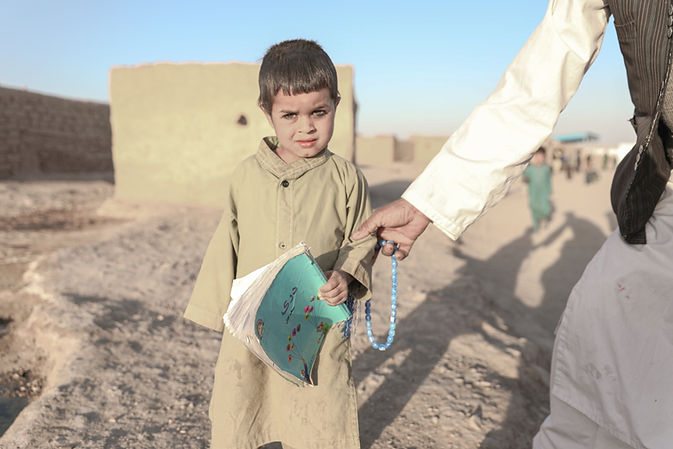
_edited.jpg)
_edited.jpg)


Interview | Mehmet Hasgüler
Mehmet Hasgüler is a Turkish Cypriot academic, writer, and political scientist known for his work on international relations and Cyprus politics. A long-time observer of regional diplomacy and governance, Hasgüler has now stepped into the political arena as an independent candidate in the 2025 presidential elections in the Turkish Republic of Northern Cyprus:
Elections in our country have lost their fairness due to the asymmetric increase in our population structure and the financial relationships in the press and politics.

Do you see yourself as an opposition candidate?
I am an opposition candidate. I am opposed to the status quo and the political ideologies and parties that are part of it.
What would be the first thing you would do if elected?
I have stated that I would carry out my duties not at the Presidential Complex (1) but at the historic Vice-Presidential office in Silihtar (2). Therefore, the first thing I would do is start work at the building in Silihtar.
Do you think independent candidates in Northern Cyprus have equal opportunities in elections compared to candidates affiliated with parties?
I definitely do not think so. When I announced my independent candidacy about four months ago, I was aware that I was embarking on a difficult path, but I never expected the media to ignore me so much. Even journalists whose worldview is close to mine are ignoring me. We are not equally represented in the media, and there is a huge difference between our election budgets. So, we definitely do not have equal opportunities.
As an independent candidate, what are the main obstacles you personally face in terms of media visibility, debates or financial support?
Firstly, Tatar (3) and Erhürman (4) have huge budgets. Their parties and organisations have many supporters. It is not easy to compete with the two main pillars of the status quo! Just a few weeks ago, I was told that the weekly cost of 70 billboards was £2 million. A simple calculation shows that Tatar and Erhürman spent at least around £50 million each on billboard rentals. This is just the billboard cost. If you add the money spent on advertising in the media and social media, the breakfasts given to hundreds of people, and the campaign teams, you end up with abnormal budgets.
Some argue that independent candidates are ‘symbolic’ and have little impact. What is your response to this perception?
This is the second time in my life that I am running as an independent candidate. On 13 June 2004, I also ran as an independent candidate in the first European Parliament elections after Cyprus joined the EU. I was the only Turkish Cypriot candidate in the elections and, despite all the attempts to obstruct me, I received 691 votes. This was more than the total votes received by the other eight independent candidates and was a significant achievement. It was not symbolic at all.
What distinguishes your vision from mainstream parties and right-leaning independents?
Mainstream parties are structures that have grown with the system, feed off the system, and are a natural part of it. They are designed to perpetuate the system. This is our fundamental difference. I am one of those who want to change the system.
How do you see the role of dissenting voices in a society like Turkey, where the political arena is strongly influenced by external powers?
I see it as weak. In our country, the mainstream opposition works to appease and distract the people. The understanding of opposition that has developed throughout history here is very different from the opposition the people expect. The fact that 'Avrupa' as a newspaper is more effective than all opposition parties and civil society organisations is one of the best indicators of this.
Many citizens feel alienated from politics. If elected, how will you address issues such as social justice, youth unemployment, or migration?
Citizens believe that nothing will come of this political approach. I see this clearly on the ground. Unemployment and migration are like twin brothers. Greedy employers have flooded our country with tens of thousands of foreign workers to exploit them under slave-like conditions, leaving our own people unemployed because they refuse to work under such conditions. First and foremost, we must stop the uncontrolled flow of migrants. If elected, one of my first tasks will be to ensure a census is conducted with international observers. We will also review the citizenship and residence-work permits granted after 2004 and revoke those that violate the rules. We will link citizenship and residence permits to specific criteria and strict rules, as is the case in the civilised world. I will carry out studies on issues such as unemployment and social justice, which are not within the President's authority, and make concrete recommendations to the government.
How do you plan to connect with communities that cannot make their voices heard, such as workers, students or marginalised groups?
Platforms such as the Youth Council and People's Council that I will establish within the Presidency will be mechanisms that enable the participation of all segments of society that have not been able to make their voices heard until now.
Under your leadership, what would a more socially just economic model for the north look like?
The President's powers are limited in this regard. Therefore, unlike Erhürman, I cannot make big promises on this issue. But by directing the resources of the Presidency towards the poor and the oppressed, we can provide them with some relief. But looking at the bigger picture, if the President succeeds in reaching a solution, economic development will already have begun. With a solution, our people can produce again with EU development funds and receive the rewards of their labour. Therefore, as a presidential candidate, when I promise a fair and peaceful solution, I am also making a promise regarding the economy.
Given the current political impasse, where do you stand on the reunification of Cyprus?
The people's wishes and aspirations are for a solution to be found. At this point, we need to organise a collective solution initiative that is shaped from the bottom up, with the people directly involved in the process. We must do this not only in the north but also in the south.
What role should Turkey play, or not play, in the political and economic future of Northern Cyprus?
Turkey's approach to Cyprus changes from one government to another, from one period to another. This is not the case in Greece. Greece respects the will of the Greek Cypriots and the decisions they take, and even embraces these decisions. We also expect Ankara to adopt an approach that respects the will and decisions of Turkish Cypriots. The final say in decisions here should belong to the Cypriots.
As for the economy, we must ensure that our society is self-sufficient. Turkey should support us in this regard, as it is also in their interest.
Do you think the elections in Northern Cyprus are truly fair, or are independent candidates systematically marginalised?
Elections in our country have lost their fairness due to the asymmetric increase in our population structure and the financial relationships in the press and politics. This has been the case for the last few elections. Those who want this system to continue will naturally want to marginalise independent candidates; this should come as no surprise.
If independent dissenting voices continue to be excluded or ignored, what dangers do you see for democracy?
Representative democracy has collapsed in our country. In a place where almost half of the population does not go to the polls, you cannot say that the election results truly reflect the will of the people or that the TRNC Assembly represents broad sections of the population. Participation in elections has been steadily declining over the last 10 years and will continue to decline as long as we are in the stranglehold of two political parties. The Assembly’s representativeness will weaken even further. I think this is the greatest danger. Imagine if voter turnout fell to 30 percent — whoever came to power would be unable to govern the country in such a situation.
If elected, how will you ensure that voices outside the mainstream parties are heard more in government?
The fundamental point of my political perspective is a model of direct democracy in which the people participate in decision-making processes. Representative democracy is a necessity in large countries like Turkey, but in small countries like ours, it is much easier to implement direct democracy mechanisms and ensure the people's direct participation in decisions. If elected, I want to build a participatory and pluralistic presidency. Structures such as the People's Council and the Youth Council that I will establish within the Presidency will not be symbolic but will have real authority. They will make decisions and present them to the President. At the same time, these councils will act as the President's ambassadors in society. They will bring the problems and suggestions of the people to the Presidency. In addition, we will establish a digital platform where citizens can submit their suggestions, vote electronically on specific issues, and see their interaction with the state in a transparent manner. This system is successfully implemented in Estonia and Finland, and I believe it will yield good results here as well.
Despite being aware of the structural disadvantages, what personally motivated you to run as an independent candidate in the elections?
I am a professor of international relations. I have published nearly 30 books. Most of them are about the Cyprus dispute. The rest are about international organisations, the Eastern Mediterranean and the Middle East. The region I specialise in is currently a hotbed of conflict. At such a critical juncture, I believe there is much that an international relations expert without the baggage of a political party can do. That was my personal motivation.
How do you maintain your hope and resilience in an environment where the opposition is frequently silenced?
Another thing as painful as silencing dissenting voices is the silence of the main opposition and a large part of civil society regarding what is happening. Because everyone is content with their own small spheres of power. Fundamental change in the system does not suit their interests. But I can see that our people are beginning to recognise this reality and that change is coming and imposing itself. I can say that the idea of contributing to this change is the most important factor keeping me hopeful and alive.
Do you see your election campaign more as a fight for the presidency or as part of a broader democratic struggle?
The main thing is to be a soldier for our people's vision of freedom and solution. Therefore, I see myself as part of a broader democratic struggle.
Many people think that politics in the north is under Ankara's influence. How do you see the balance between local autonomy and Turkey's intervention?
The UBP (5) and CTP (6) mentality, which has chosen the easy way out, is responsible for this situation. It is a political approach that our people have chosen but which has accepted from the outset to be a puppet of Ankara. Let me state this clearly: if I am elected, I will not be a president who takes orders from ambassadors and acts like a ceremonial figurehead rather than a community leader.
What changes would you like to see in relations between Northern Cyprus and Turkey?
I would like Turkey to defend two democracies in Cyprus, not two states. This is what will institutionalise our political equality with the Greek Cypriots. When Turkey respects Northern Cyprus's democracy, respect for Turkish Cypriots in the international arena will also increase. This will make both us and Turkey stronger.
Some circles argue that the voice of Turkish Cypriots is overshadowed. How can independent candidates like you make that voice heard—or at least, do you have such a goal as an independent candidate? Do you think Turkey's role strengthens or weakens democracy in the north?
If, as Erhürman says, the voice of Turkish Cypriots has been silenced in the last five years, why has the CTP not fulfilled its opposition duties? For example, instead of standing like scarecrows in Parliament, they could have returned to the people, boycotted Parliament and explained their reasons to the public. They did not do so because both the government and the opposition are under the control of the same power centres.
It is very clear that Turkey has played a role in weakening democracy in Cyprus.
What is your vision for the future of the Cyprus Problem — do you still consider reunification realistic, or could a different model be applied at this point?
Reunification is very difficult given our current severe economic and social problems. We need to make progress in many areas, primarily the economy, and reach the standards of the Republic of Cyprus. To this end, implementing a transition process similar to the general rehabilitation model applied during the transition from colonialism to independence could be a solution.
Many people argue that the negotiations have been stuck in the same framework for decades. Do you have an alternative proposal for the negotiations?
We must build solutions from the bottom up and ensure the direct participation of the people in the negotiation processes. The Cyprus problem is no longer just a matter for the negotiating teams. I believe we can overcome the deadlock by implementing direct democracy.
As an independent candidate, do you think you have more freedom to propose bold or unconventional solutions than candidates affiliated with a party?
Of course. I am accountable directly to the people, not to a party. I don't have any fear of thinking, ‘If I say this, will they call me from Ankara and give me a dressing down?’ This makes me more free.
How do you plan to communicate with young people who see the Cyprus Problem as a thing of the past?
Today, young people are not represented in politics and decision-making processes; they are only remembered during elections. The way to break this is to involve young people in the participatory processes I mentioned earlier. The Youth Council I will establish in the Presidency will be the first step in this direction.
Can the EU, the UN or international actors ensure a fair resolution of the Cyprus Problem without excluding local voices, and how can they do this?
The UN already recognises us as a society. The EU acquis is also on our side, but it is not being implemented in practice due to the current situation. What happens next depends on the vision we put forward. I am the only candidate who is an expert in the field of international organisations, who knows the dynamics of these organisations best, and who can put forward the necessary vision.
Do you think that pressure from Turkey or other international actors prevents Turkish Cypriots from acting freely at the negotiating table?
Relatively speaking, yes. Turkish Cypriots are equal founders of the Republic of Cyprus, established by the 1959-1960 London-Zurich agreements. This is of great importance. An approach that demands our rights in the Republic of Cyprus will cause everyone to take a step back and reconsider the issue. Between 1878 and 1958, Turkish Cypriots fought for their existence and freedom with no one behind them. On the other side, there was the British colonial power on one side and the numerically superior Greek Cypriots on the other. After such a difficult process, we became founding partners. Could there be anything more foolish than giving up these rights? We must stand firm on the rights we have gained in the Republic of Cyprus. Today, 110,000 Turkish Cypriots are citizens of the Republic of Cyprus. That alone tells us a lot.
What kind of guarantees would you demand to ensure that any future agreement truly reflects the will of both communities?
Let me say this first. The guarantee system is a model of the old world. It is a primitive and humiliating system. However, the vast majority of our people see guarantees and security as one and the same. There are historical reasons for this. But ultimately, guarantees are not a matter for us or the Greek Cypriots. It is a matter for the guarantor countries, Turkey, Greece and the United Kingdom. Our priority must be to reunite our country and establish peace.
(1) A Presidential Complex ( built alongside a mosque) in the North Nicosia built by Turkey in 2025.
(2) A former area of presidential palace in the North Nicosia.
(3) Turkish Cypriot politician, academic, and lawyer. He served as the Prime Minister of the Turkish Republic of Northern Cyprus from 2018 to 2019 and is the leader of the Republican Turkish Party (CTP). Erhürman, known for his advocacy of a federal solution in Cyprus, is also a candidate in the 2025 presidential elections.
(4) Turkish Cypriot politician and economist who has served as the President of the Turkish Republic of Northern Cyprus since 2020. A member of the National Unity Party (UBP), he is known for his support of a two-state solution in Cyprus and is a candidate in the 2025 presidential elections.
(5) National Unity Party.
(6) Republican Turkish Party.
Image credit: https://mehmethasguler.com/about/
October 13, 2025
''Party candidates carry years of baggage and fears about Turkey. They want the status quo to continue; they don’t want to lose the patronage networks they’ve built over half a century. Because of this, I am much freer than party politicians.''
''I don't think Northern Cyprus has enough political and economic independence to hold its own democratic elections. But I believe it is within our power to change this.''