
Lisboeta International Short Film Festival


August 26, 2026
REVIEW ★ ★ ★ ★

HOW TO KILL
YOUR SELECTION CHANCE AT LISFF:
A CASE STUDY OF "COPE"
Anthony Sutcliffe’s short drama Cope, which surfaced on YouTube in early 2025 and rapidly racked up over 1.3 million views, presents a familiar existential crisis: a man named Liam faces a fatal six-week deadline. On paper, it is a clean, competent piece of filmmaking. Yet for programmed curators at festivals like LISFF (Lisboeta International Short Film Festival), Cope serves as a textbook example of why technical fluency alone rarely secures an Official Selection.
Visually, Sutcliffe knows how to construct a scene. The shooting dynamics are well-judged, utilizing precisely chosen compositions to map out a man’s psychological decay. The editing is virtually seamless; the camera holds on every frame for the exact right duration, sustaining a rhythmic, controlled pace that keeps the online viewer hooked.
So where does the armor fracture?
First, in the performances - or rather, the systemic suppression of them. Because the film relies heavily on non-stop voiceover narration, the actors are rendered passive. Narrative cinema thrives on subtle human interactions, reactive close-ups, and genuine dialogue dynamics. Here, performance is reduced to B-roll for a monologuing inner voice, stripping the characters of dramatic immediacy.
The fatal blow, however, is the score. The cardinal rule of auteur short film scoring is intentionality. Why open a film with music right out of the gate?
Worse yet, why usher the audience in with a wall-to-wall track so thoroughly generic that it flattens the narrative into a glorified public service announcement? The moment that stock-emotional music swells, Copesheds its artistic edge and descends into the realm of a polished social campaign video.
To LISFF submitters: Cope proves that high view counts and sleek editing are not enough. When a film relies on a wall of voiceover that suffocates its actors, and saddles its imagery with corporate-sounding music, it loses its cinematic soul. Film festivals like LISFF look for uncompromised vision, not flawless production value serving middle-of-the-road aesthetic choices.
___________________
'Cope' is available on Youtube:
https://www.youtube.com/watch?v=JnXOE6FFoWA

LISFF Tips

WHAT FILMMAKERS OFTEN GET WRONG WHEN SUBMITTING TO FESTIVALS
As a new festival season approaches, we have put together 10 of the most common mistakes filmmakers make when submitting their films to the Lisboeta International Short Film Festival (LISFF) - based on what we see, year after year, on the other side of the submission process.
1. Submitting the wrong version of your film
Make sure the film you submit is the final version.
Watermarks, unfinished colour grading, temporary subtitles, missing sound corrections or poor audio quality can immediately affect the first impression of your film. If you are still working on the film, it is usually better to wait until you have a properly finished version before submitting.
2. Your synopsis doesn't actually explain the film
A synopsis should give the programmer a clear idea of what the film is about - without turning into a press release.
One common mistake is revealing almost nothing about the story. Another is writing a synopsis full of promotional language rather than useful information about the film.
Even worse are misleading synopses that promise something the film itself does not deliver.
Keep it concise, accurate and honest.
3. Submitting more than one film during the free submission period
Many festivals offer a short free-of-charge submission period, often during the first days of their call for entries.
At LISFF, only one film can be submitted by a single director during this period. Submitting more than one film during the free period can result in the disqualification of all submissions made by that director during that period.
Always read the festival's submission rules carefully before submitting.
4. Bad or absent subtitles
An otherwise excellent film can make a poor first impression because of its subtitles.
Poorly translated English subtitles, spelling and grammar errors, subtitles that are difficult to read, or - most importantly - no subtitles at all when they are required can seriously affect the evaluation of a film.
At LISFF, we do not accept separate subtitle text files. If subtitles are required, they should be properly integrated into the submitted screening copy.
Your subtitles are part of your film's presentation. Treat them accordingly.
5. Your private screener doesn't work
A broken Vimeo link, an incorrect password, an expired link or a YouTube video that has accidentally been set to private can prevent the selection team from watching your film.
And this is important: don't assume the problem will automatically be checked again later.
If the screener cannot be accessed when the film is being evaluated, your film may end up in a folder that is not reopened during the selection process.
Before submitting, test your link yourself - preferably from a different browser or device - and make sure the password works.
6. Your film information is incomplete
Missing or inaccurate information creates unnecessary questions about the production.
Make sure your submission includes all the required details, including:
runtime
country of production
production year
genre
cast and crew
premiere status
director's information
contact details
Incomplete information can make a submission difficult to evaluate and, depending on the festival's rules, may result in disqualification.
7. Making your film publicly available while submitting to festivals
LISFF does not require a premiere status. In other words, your film does not have to be screened at LISFF for the first time in order to be eligible for selection.
However, there is an important distinction between premiere status and public online availability.
If a freshly completed film is already publicly available on YouTube, Vimeo or another open platform, this can significantly reduce its chances of being officially selected for LISFF.
Why? Because a festival screening is an opportunity to present a film to an audience for the first time in a dedicated cinematic environment. When the complete film is already freely available online, part of that value is lost.
For this reason, if you are actively submitting a new film to festivals, we strongly recommend keeping the full film off publicly accessible platforms until its festival run has had a chance to develop.
A private or password-protected screener is, of course, different from making the film publicly available.
8. Sending the same film everywhere without considering the festival
Not every festival is suitable for every film.
Before submitting, check the festival's eligibility requirements and competition categories.
For example, LISFF's competition section does not accept films longer than 20 minutes, documentaries or animations.
A five-minute experimental short may be perfect for one festival and completely unsuitable for another.
Target your submissions.
9. Not researching the festival
LISFF does not have a specific genre requirement, but that doesn't mean every film is necessarily a natural fit for the festival.
Take a little time to look at previous editions, selected films, the festival's programme and its general character.
This isn't about trying to predict exactly what the selection committee wants. It is about understanding where your film might belong.
Researching the festival can save time for both the filmmaker and the festival.
10. Forgetting about your submission after pressing “Submit”
Submitting your film is not necessarily the end of the process.
During the official selection period, LISFF communicates with filmmakers by email and regularly publishes updates and news about the festival.
Once your film is selected, there may be important deadlines for submitting screening copies, stills, photographs, biographies, director's statements and other materials required for the final programme.
Every year, there are filmmakers whose selected films ultimately do not make it onto the festival screen because of a lack of communication or failure to meet important deadlines.
So don't simply submit your film and disappear.
Check your email. Follow the festival. Watch the deadlines. Stay in touch.
Your film's journey doesn't end when you press Submit.
August 13, 2026
LISFF 2026 REVIEW INTERVIEW

Interview with Polina Biliaieva, the director of the film Fuck Them All, which won the Best Film Award at the 5th Lisboeta International Short Film Festival
April 27, 2026
Your film Fuck Them All has just won Best Film at LISFF 2026. What was your immediate emotional response when you heard the news, and has that feeling evolved since?
As for every emerging filmmaker, this moment means a lot to me. To know that the hard work, the emotional depth, and everything I wanted to express
and share with the world have truly been seen is incredibly moving. When I first heard the news, I was full of happiness. It gave me a deep sense of meaning and confirmation that my crew and I were not working on this short film in vain, but were part of something that truly mattered.
As a debut student film submitted through Warsaw Film School, what did this project represent for you personally at the time of making it?
Studying at Warsaw Film School, we make a short film at the end of each academic year as an exam. I came to Warsaw, Poland, to study directing from Kharkiv, Ukraine. When I was in Warsaw, the war started in my hometown. This was very hard for me, especially as I became a mother a few months after it began. At that time, war and motherhood - two such strong topics - coexisted in my life.
Naturally, I started to pay more attention to women’s stories and their experiences of war and motherhood. I read an article about women coming to Poland after the occupation, who had been raped and become pregnant. When they wanted to terminate these pregnancies in Poland, they learned that it was impossible due to Polish abortion law. So they had escaped war and occupation in their country, but still were not free to make decisions about their own bodies in this safe country. I felt then that I wanted to tell this story.
I have also heard a lot from my family and friends about their evacuation and their experiences of war and being refugees. I added their stories to the film too.
The title Fuck Them All is striking and confrontational. How did you arrive at it, and what does it encapsulate about the film’s core idea?
When the war started in Ukraine, I was, of course, very scared and worried about my family and friends. Then this fear turned into anger when I heard and saw what was happening there. I was angry that children could not have a normal, peaceful childhood, that women had to give birth under bombs, and that children were dying in missile attacks.
I was also angry that I could not return to my hometown and allow my children to meet their grand-grandparents, because it was simply too dangerous to go there.
For me, the title represents anger toward a world system in which war happens, children are dying because of it, and women cannot make decisions about their own bodies.
Without revealing too much, what was the initial spark or moment that led you to develop this story?
I think it started when I read an article about Ukrainian women fleeing the war and coming to Poland, and realizing that under Polish abortion laws they could not access abortion there, even in cases of rape. It was a very difficult article for me to read because I had just recently become a mother myself.
At the same time, I had also been hearing many stories from women I knew who had become mothers after the war had already started in Ukraine. I kept thinking about how incredibly hard and powerful it must be to choose motherhood in the middle of a war in your own country.
At some point, all of these impressions came together in my mind and turned into a story. This film is not about motherhood in a broad sense, but rather about the decision to become a mother under such circumstances.
Many first films carry traces of their creators’ inner conflicts or observations. In what ways does this film reflect your own experiences or worldview?
Despite not being in the same situation as the character in the film -Kira- I am also a Ukrainian immigrant in Poland. I wanted to show this feeling of being “other,” “not from here.” And in such circumstances as Kira had, it was very hurtful for her; she didn’t feel any comfort or support in her situation in another country, she only felt it at home, even if there was war there.
I also missed my hometown very much. So I wanted at least my character to go there, to go home.
Could you describe your creative process while working on the film - particularly how you approached directing actors and shaping the tone?
With Daria Polunina, the actress who played the main character in the film, we are both Ukrainians living in Poland. I think we were on the same emotional wavelength when I sent her the script. We hardly needed to rehearse; we simply talked about our own experiences and about our character, Kira.
We both immediately understood how it should be. I think it was a rare, instant connection between the actor and the director.
Being part of a film school environment often means balancing creative ambition with limitations.What were the biggest constraints you faced, and how did they influence the final film?
Of course, the biggest limitation in student films is always the budget. But despite this limitation, we tried to show as much truth as we could. We were filming in real locations, like a real, working train station with only one train a day from Ukraine (so we had one shot); a real hostel where Ukrainians are living in Poland, etc. It took a lot of negotiating, but usually people are very helpful when they see that this is very important for you, that the story you are trying to tell matters.
Festivals often interpret films in ways directors don’t expect. Have there been any audience reactions or readings of your film that surprised you?
Frankly speaking, I cannot recall any different reactions, but one thing that is very touching for me is that every time after the screening of the film, some women come to me to say thank you or to share that it was very moving for them. This is very meaningful for me, and I completely understand why women react more strongly to this film.
Now that your debut has received international recognition, do you feel any pressure or shift in how you approach your future projects?
Such things, of course, inspire you and give you some confidence to move forward. There is also something like this, this pressure, that with the next project you are afraid it will not repeat this success, but if I won’t try, I won’t know. So I have to just keep going!
What were the main challenges you encountered while bringing this story to life - both in terms of technical execution and in shaping the narrative itself?
With this film, the most difficult part for me was that, as a student film, it had to be approved by the school as part of the exam process. Some professors did not understand certain scenes connected to being a Ukrainian war refugee in another country, so I had to insist on not cutting them.
This made me realize that viewers in Poland and Ukraine might perceive the film differently, and for me it was important that all perspectives remained visible in the film.
Could you share some insight into the film’s budget and production background? How was the project financed, and who were the key people or institutions involved in its production?
At the Warsaw Film School, students develop projects every year as part of the curriculum, and then pitch them in front of a commission, where the projects are evaluated and graded. The highest-rated projects can receive funding provided by the school through support from the Polish Film Institute.
Most films receive partial funding based on their grades, but it is usually not enough to cover the full production costs. As a result, students often contribute their own savings, and some take on jobs specifically to finance their films. Others also turn to crowdfunding to complete their budgets.
Looking ahead, what kind of stories or themes are you interested in exploring next - and do you see yourself continuing in a similar artistic direсtion?
I’ve always been drawn to stories about women and women’s experiences. Apart from this film, I previously made one about a young girl exploring her sexuality and looking for an orgasm. I tend to work with themes connected to women’s lived experiences and life circumstances, often inspired by my own perspective as well as the experiences of women around me.
It’s a subject that genuinely interests me and continues to guide my work. I’m currently developing the script for my debut feature, which is also centered on a woman, the female body, and is in some way connected to motherhood as well.
At the same time, I like to experiment with form and genre. I’ve worked in both comedy and drama; now I’m interested in exploring more genre-driven cinema in the future.
LISFF 2026 Concludes, Celebrating the Power of Short Cinema
April 6, 2026
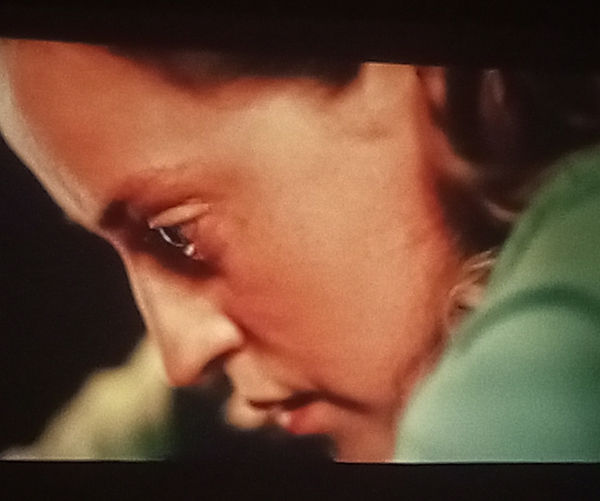
Fuck Them All Wins Best Film
For its courage, humanity, and unflinching gaze at a reality too often reduced to headlines, Fuck Them All, directed by Polina Biliaieva is awarded Best Film at the 5th Lisboeta International Short Film Festival.
With striking realism and emotional precision, this powerful student film confronts autonomy and survival in the shadow of war - a raw and deeply human story of grief, exile, and impossible choice.
LISFF recognizes short films as autonomous works of art, capable of expressing complex ideas, emotions, and political realities within a condensed timeframe. The brevity of the form demands precision and clarity, while simultaneously encouraging innovation. In a short film, every frame carries weight. There is little room for excess, often leading to bold stylistic choices and unconventional storytelling approaches. For many filmmakers, short cinema is also a space of formation. It is where they discover their voice, test their limits, and engage with the language of cinema in its most direct form. Free from the constraints of large budgets or institutional expectations, they can experiment with structure, tone, and perspective. This process is not merely preparatory -it is essential. Some of the most significant developments in contemporary cinema have emerged from practices rooted in short filmmaking.

Bence Darvas wins Best Cinematography Award for his work in Happy People.

The Land of Wanting More, directed by Marianna Rantou, wins Jury Special Mention.

The cast of 'Monkey', directed by Mohsen Habibi wins Best Child Cast Award .

Color of Tea, directed by Raj Sargam, wins Jury Special Mention.
Moreover, short films often respond more immediately to the world around them. Their shorter production cycles and flexible scale allow filmmakers to engage with current social, political, and cultural realities in a more direct and urgent way. In this sense, short cinema becomes a space of reflection and resistance, offering perspectives that might not find a place within mainstream narratives.
LISFF continues to position itself as a platform for these voices. It is not simply a showcase, but a space of encounter -between filmmakers, audiences, and ideas. By bringing together works from diverse contexts, the festival highlights the plurality of contemporary short cinema and its capacity to challenge, provoke, and inspire.
LISFF 2026 Official Selection Screening Program
The LISFF 2026 Official Selection Screening Program brings together outstanding short films from around the world. Carefully curated, this year’s selection reflects bold cinematic voices, diverse perspectives, and innovative storytelling. The screenings celebrate emerging and established filmmakers shaping the future of short cinema.

+16

All screenings will take place at Rustem Bookshop, Nicosia, Cyprus.
Lisboeta
International Short Film Festival Announces Its Official Selection for 2026

Lisboeta International Short Film Festival announces the Official Selection of its 5th edition, a special Mediterranean focus that will take place in Nicosia (north), Cyprus, on 27- 29 March. From 1,583 submissions representing 108 countries, 22 films have been selected for screening in the official competition programme.


ANGIE, DIRECTED BY ANGEL BROPHY IS A MUST- WATCH FILM FOR ANYONE PREPARING TO SHOOT A FIGHT SCENE -AND HERE IS WHY...
One person fighting against at least five usually leads the viewer to search for tricks: special effects, editing shortcuts, or visual sleights of hand that reveal how the scene was constructed. But here, there are none. It is difficult enough to imagine one person taking on many; it is even harder to accept a small, young woman fighting multiple men entirely on her own --and yet Angie makes it feel real.
The fight is long and relentless. Defeated men rise one after another to attack the sole woman they are all trying to bring down. She is wounded, exhausted, but she does not give up. The staging and shooting of this scene -the longest scene in the film- are so organic and dynamically constructed that it makes the viewer to hold their breath until the very end. This organic rhythm lends the film a powerful sense of physical and emotional realism.
From a dramaturgical perspective, a woman fighting men to rescue a trafficked woman produces a striking effect, leaving the viewer with a lingering sense of justice and hope --particularly in the face of deeply rooted traditional norms and beliefs.
Renée Ortiz’s performance is outstanding. She convincingly embodies both fragile femininity and fierce resilience, and the image of her character remains with the viewer long after the film has ended.
"Think me as a ridiculous fool type referenced in Aristotle's
Poetics "

February 4, 2026
It is a rare case for a film’s trailer to be five times longer than the film itself. But this is not the only reason Un Pot Surveillé captured our attention. This way of introducing the film invites the viewer into a different experience --one that opens a direct line of communication with the auteur. The 56-second film, which captures the process of boiling a pot of water, raises more questions than it tells a story.
LISFF Director Elvan Levent addresses some of these questions with the film’s writer and director, Jamie Ward, in order to better understand his motivation for making the film.
director's statement
T.E. Lawrence was a writer, an archaeologist, and a reluctant soldier. He is perhaps one of the most heroic and underrated figures of modern history. He embedded himself with Bedouin tribes and helped lead the Arab Revolt against the Ottoman Empire, not for personal glory but in service of a cause greater than himself.
If more warriors were poets, the world might know less war and more poetry. That belief is at the core of every creative endeavor I pursue. I would never claim to be as brave or as accomplished as Lawrence, but his journey continues to inspire me. I wish more people knew his story.
He changed the world by building community and helping people who did not believe they had the strength to rise up. That is the message I try to share in my work. Because often the enemy is not another person or government. Sometimes the real opposition is internal -- fear, self-doubt, laziness, or the need to measure ourselves against society’s expectations. These are the true enemies of art.
My goal in filmmaking is to be simple and clear. I spent a year working with local tribes in southern Afghanistan, helping them build communities with the hope that one day there would be space for art and storytelling in a land long shaped by violence.
Picture, sound, and story are tools. I use them not just to entertain but to convey meaning. I do not think of myself as an artist. I am someone who makes films that I hope people can lose themselves in while they play, and that stay with them long after the credits roll.
ıntervıew
Elvan Levent: Did you decide to make Un Pot Surviellé suddenly, or was it an idea you had been thinking about for a while (particularly in this form)?
Jamie Ward:This will sound ridiculous, but I’ve been working on it for years. I’ve shot the whole thing multiple times, over the years with different locations and gear. This latest and the final iteration has built upon my prior attempts and knowledge about the different filmmaking disciplines. In a lot of ways, it is a huge idea in my head, and I think the art that no one will ever really see, unless they were talking to me about it, is that it's incredibly short, at least what is left of it is. Projects like this have a tendency to ramble on, so keeping it concise was the true challenge.
Elvan Levent: The trailer for the film is almost 5 minutes, which is five times longer than the film itself, reads as an irony -or even a mockery -of cinema, particularly of auteur cinema. At the same time, it feels as though it was made with great love for cinema. Do you consider cinema to be an overrated art form?
It’s important for me to declare at the beginning, I'm completely aware that it could seem like it’s a mocking tone in some ways. I spent years as a stand up comedian, and I love the power of humor. That being said, it is all love of cinema. It’s meant to be about as harsh an indictment of art as teasing your best friend about their bad habit, when you have the same habits. I think the art of cinema is even broader than simply the films themselves. They are the stories behind the scenes, the journeys the artists took to make them, the collaboration and evolution of ideas as creators join the effort or fall off. I view all my projects that way. The way I arrive at my ideas is as much a piece of the project as the viewable videos themselves. A lot of times, these secondary aspects are not shared. This is when I realized that trailers really offer an opportunity to convince someone why they should watch your film, and they’re often overlooked as part of the art. I’m not for a moment trying to equate myself in any great way to my heroes, I will say, I simply pulled a lot of inspiration from old trailers, with Citizen Kane’s being the biggest influence. It’s over three and a half minutes, and isn’t like what we think of as trailers today. It has narration that explains why the movie should be watched. I love those old trailers, and with nothing to lose, I decided to make this film trailer like a modern day version of those old classic film trailers.
Elvan Levent: Another question that follows from the second one: the French title of the film is almost inseparable from the director’s image in the trailer -that Godard image. Was this your intention, and If so, why?
Jamie Ward: I almost feel embarrassed to say it, because I think it’s sort of cliche-ish, Godard is my favorite filmmaker, and the French New Wave movement has been incredibly influential in my film journey. I do work primarily in the Acadian region of Louisiana, where there is a deeply ingrained French culture and history. Many of my friends and co-workers trace their lineage to France, and Cajun French being somewhat prevalent in the area, so having a French title is not meant as a cheap gimmick from a non-french person. Given that the area I live is focused on retaining cultural heritage, I feel that there is an inclusion of French influence as acknowledgement not only of the film influences from France, but also the french culture of louisiana and in a literal sense, the audiences in my geographical area who are most likely to see my works.
Elvan Levent: What is the meaning and reason of the writing on the film's poster: 'A wholesome movie about sex?'
Jamie Ward: Disclaimer: I really hope I don't start to sound like a piece of shit who thinks highly of himself, I walk a dangerous line of perception where I do possess a level of self awareness that I am the creator creating, but it is all meant in fun, because I'm so grateful that despite all the things I've been through in life I now am blessed with the opportunity to do what I've always dreamed of doing, and often didn't think was really possible.
Almost everything I do is laiden with what can probably be equated to personal easter eggs. Tiny jokes not mean at the audiences expense, more like a hidden joke in bubble gum wrapper for those that choose to find and enjoy them, and not changing the experience if they're thrown away unacknowledged.
I love the sort of existential dichotomy of comedy, like big C conceptual comedy. Think me as a ridiculous fool the type referenced in Aristotle's Poetics. One who is obsessed with the irony of sex being one of the major factors pushing a film into non-family friendly territory, while also being the cause of families existing.
The literal message of my film Un Pot Surveillé actually was meant to have an inspiring message there being no gatekeeper to the human experience and most obstacles are self imposed. It is a totally family friendly film and so in my self-referential attempt to add a humorous element to a poster which I intended to mimic the style of my favorite French New Wave filmmakers. Saying something is wholesome and about sex couldn't be more contradictory to a western film audience. Part of the biggest joking being that French New Wave is permeated with themes of death and existentialism which in reality is far more a taboo subject in the US and yet allowed to be depicted much more pervasively in our media.
WHY IS PARTICIPATION IN LISFF A VALUABLE EXPERIENCE? January 15, 2026

Born and raised in Lisbon, LISFF, now in its fifth year, continues to grow in Nicosia, Cyprus, connecting different cultural and geographic contexts and offering filmmakers a platform where stories travel, resonate, and gain new meanings across borders.
What does Lısboeta ınternatıonal short fılm festıval
offer as a festival?
✦Every valid submission is carefully viewed
At LISFF, we watch and evaluate every valid submission in full. Your film is never auto-dismissed or judged solely on metadata, reputation, or budget.
✦Curated selection, not mass acceptance
We focus on thoughtful curation rather than volume. Selected films are chosen for their artistic, narrative, and thematic strength.
✦Respect for independent and emerging filmmakers
LISFF values independent voices, first-time filmmakers, and bold creative visions, regardless of production scale.
✦Transparent submission criteria
Our definition of a valid submission is clearly stated on FilmFreeway. If your film meets the rules, it will be seriously considered.
✦International outlook
As an international festival, LISFF welcomes films from all countries and cultural backgrounds.
✦Strong editorial and critical context
Selected films are presented within a broader critical and cultural framework, encouraging dialogue around cinema, society, and lived experience.
✦Visibility beyond screening
LISFF actively promotes selected films through AVFRI.com and social media channels, helping filmmakers reach audiences beyond the festival dates.
✦Carefully built festival identity
LISFF is not just a screening platform but a growing cultural project with a clear vision, aesthetic, and curatorial direction.
✦Filmmaker-friendly communication
We believe respectful, clear, and honest communication with filmmakers is an essential part of the festival experience.
✦ ✦ ✦ ✦ ✦

January 10, 2026
WHAT DOES THE DINNER PARTY GIVE TO THE VIEWER?
A DESIRE TO WATCH MORE OF IT.
REVIEW
The Dinner Party, a 16-minute short film directed by Simon Neal, is a black comedy built on witty dialogue, brilliant editing, and exceptional performances. Yet it is everything you do not expect after noticing the comedy genre label in its description -which makes it another strong example of films being misrepresented by an inaccurate genre classification.
What does this film give the viewer? A desire to watch more of it.
Why? Because of its perfectly constructed characters, dynamic editing, and a sense of familiarity that many people can easily relate to -turning it into a different kind of enjoyment, though certainly not a pure comedy.
Not entirely, but a significant part of the film takes place inside a small house. And we all know that filming most of a story in a single location is a risk, especially with only two characters. Why?
Because a single-location film can easily feel theatrical, which already contradicts the nature of cinema. To keep the audience engaged in such a confined setting, the context must be shaped with great precision so the viewer never feels bored -something director Simon Neal achieves masterfully in The Dinner Party.
The Dinner Party | Directed by Simon Neal | starring Daniel Ings, Louise Ford, Amanda Hale and Mike Wozniak | 16 minutes | 2021

January 3, 2026
REVIEW
The Darkest Blue, directed by Andrew Steggall
can poor acting destroy
a well constructed film?
After watching the film, one is left with the uneasy confirmation of a familiar and troubling truth: the evaluation of an artist’s work remains profoundly subjective, and too often recognition arrives only after death. This bleak irony lies at the heart of the film’s central premise - that to be fully seen, acknowledged, and validated as an artist, one must first disappear. While this perspective is not entirely new, the film frames it as a pointed critique of the cultural reality we continue to inhabit.
The film’s dramaturgy aligns closely with its aesthetic sensibility. The restrained color palette, the measured movement of the camera, and the recurring images of the sea - which subtly transforms into an active witness, even an accomplice to the unfolding crime - work in concert with the thematic score. Together, these elements form a coherent and atmospheric unity that supports the narrative rather than overwhelming it.
However, the film falters in its dramatic momentum. A noticeable lack of depth in the performances, particularly in the characters’ emotional reactions, diminishes the narrative tension. This emotional restraint, rather than serving the story, ultimately weakens its impact, preventing the film from fully realizing the weight of its thematic ambitions.
___________________________
The Review section at AVFRI is dedicated to short films that invite reflection beyond their runtime and are publicly available on various platforms such as YouTube or Vimeo.
Lisboeta International Short Film Festival
Rules & Regulations 2026
October 3, 2025
* We accept fiction films of any genre up to 20 minutes. Other genres (including documentary and animation) can be accepted to be screened at the festival only in non-competition section.
* Films that have been completed prior to March 30, 2024 are not eligible to submit to the competition category of the festival.
* All content submitted in any language (including English) is required to have English subtitles included.
* All films must be submitted on NTSC DVD or PAL or as an online screener. We do NOT screen films in any other format.
* No porn content.
* We reserve the right to promote any film submitted to LISFF via our social media channels or website. This may include Facebook, Twitter, Instagram and Youtube.
* In regards to intellectual property, you are fully responsible for the copyrights of any images, music, sound or graphics contained in your entry.
* If you are an independent filmmaker (if you as a director produced your own film) and your film is premiering at LISFF, you can submit your film without an entry fee by sending us a preview copy via email beforehand (contact festival directly to learn other possible benefits).
* There are two stages of selection at LISFF:
1.Preselection:
Films that are preselected at the festival are not in the stage of ‘Official Selection’ and their ‘Judging Status’ on FilmFreeway do not change. These are the films that have passed the first selection and are selected to be considered for the ‘Official Selection’.
2.Official Selection:
Officially selected films are the films that are listed to be screened at the competition section of the festival. As soon as the film is officially selected its Judging Status on FilmFreeway changes and submitter gets notified.
* Films that are presented on the social media channels of the festival (Facebook, Instagram, Youtube) under the 'Spotlight' announcement for the promotional purposes are not considered as 'preselected' or 'officially selected' unless they are announced so.
* Films that are publicly available on online media platforms will not be eligible for the competition section of the festival, even if they meet all other criteria for official selection.
* LISFF is hereby granted the right to utilize an excerpt from any film submitted and accepted for exhibition at the Festival for promotional purposes.
* The selection committees’ and juries’ decisions are final.
* Lisboeta International Short Film Festival reserves the right to make any necessary changes in regulations or scheduling.
* The Festival reserves the right to exhibit any submitted film that is more than two years old on its official website or online platforms (e.g., avfri.com) for promotional purposes for a maximum period of 48 hours.
* The Festival reserves the right to publish a review or analysis of any submitted film on its official social media accounts, its Patreon page, and its official partner website, avfri.com.
* During the Early Bird period, each submitter is limited to one film submission. Any additional submissions will result in all entries being disqualified.
* By submitting your film to the LISFF, you agree that you have read and accepted rules of the festival.


LISFF
2026
5th Edition
Still frame from the film As it Was, awarded Best Director at the 4th edition of LISFF.
September 20, 2025
Lisboeta International Short Film Festival is Getting Ready
to Open Submissions for its 5th Edition
The countdown has begun: submissions for the 5th edition of the Lisboeta International Short Film Festival will soon be open, and with it comes the thrill of discovery. Each new application season feels like stepping through a door into an uncharted universe—full of mystery, creativity, and stories waiting to be told.
Short cinema has always been a world of experimentation, but the last decade has transformed it beyond recognition. At the heart of this shift is the digital revolution. Social media platforms have shattered the old barriers between filmmakers and their audiences. Today, a film can be made with minimal resources, uploaded in an instant, and find itself watched by millions across the globe. What once required costly distribution deals or festival laurels is now possible for anyone with a camera and a compelling vision.
But it’s not only the way films are made that has changed—it’s also the way they are seen. Audiences are evolving with every season, and short films fit perfectly into our accelerated cultural rhythm. In an era of fleeting attention spans, the short film delivers concentrated emotion and impact. Its brevity is not a limitation but a strength, offering space for bold experiments and daring narratives that mainstream cinema often resists. This is what we observe every festival season at Lisboeta.
Every year, the Lisboeta becomes a meeting ground for this energy: a space where filmmakers push the boundaries of storytelling and audiences discover just how powerful a few minutes on screen can be.